Food has entered one of its most confusing moments in
decades. Health claims are louder, more polarized, and more politicized, leaving consumers unsure who — or what — to trust.
For Amy’s Kitchen, with about $1 billion in annual
sales, that chaos has created an unusual position. As one of the original organic “better-for-you” frozen food brands, the company says it doesn’t need to reformulate, rebrand, or
chase emerging ingredient trends. Instead, it’s focusing on explaining — more visibly and more deliberately — standards it has followed for decades.
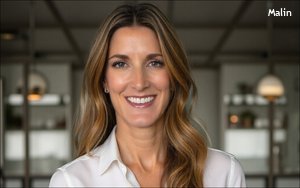
Carla Malin, vice
president and head of marketing, says the challenge now isn’t innovation for its own sake, but defending trust in a category where wellness language has become table stakes.
This interview has been edited for length and clarity.
advertisement
advertisement
CPG Insider: Food feels more politicized and confusing than it has in years. How do you see consumers processing
all the competing health messages right now?
Carla Malin: Food has become one of the most emotionally charged categories in culture. You have all these factors converging: politics,
wellness trends, social media, better-for-you claims. And they are often louder than they are accurate. For consumers, it's creating confusion and fatigue.
CPG Insider:
Amy’s is more than 40 years old and helped the USDA shape its first organic standards back in 2002. And you’ve said it doesn’t need to reformulate to meet this moment. Why does
that matter strategically right now?
Malin: As consumers demand more transparency, other brands are scrambling to reinvent themselves or to reformulate their products, whether
that’s based on new legislation or consumer sentiment. We're proud that we get to show up exactly the way we have for 38 years. We don't need to change our sourcing policies and practices. We're
so well-suited for this particular moment.
CPG Insider: Many brands are making louder “better for you” claims to stand out. How does Amy’s think about
differentiation when trust — not novelty — is the goal?
Malin: Everybody has a point of view on every specific ingredient. Consumers are not registered dietitians.
They're not scientists. They just want to be able to figure out what is factual, what is accurate. And we just present ourselves as people who cook like you do at home, but in larger pots.
We
have that strong brand equity in being a better-for-you brand, even though we've never shouted from the rooftops. And people know when they look at Amy's meals, they can read the back of the label and
understand the ingredients.
CPG
Insider: You joined Amy’s nine months ago, and have worked at Beyond Meat, Red Bull and Unilever. What does that perspective give you about the gap between Amy’s scale and how it was
showing up in culture?
Malin: When I joined, what I heard from everybody was, “We have the best story, but not enough people know it.” So my mission is to tell our brand
story, at scale, to bring more people into the tent. We’re introducing video as with our founder story, highlighting how we source our ingredients and how we cook. It’s a way to
demonstrate our product differentiation. It’s not about slogans; it’s about real food. Those videos are running in many places, including YouTube and social media, with some paid
amplification. The idea is to gain new customers but also deepen brand love among people who already know us.
CPG Insider: When consumers decide what’s for dinner, who is
Amy’s really competing against — other frozen meals, or something broader?
Malin: The closest-in competition is on the freezer shelf. But it's broader than that. Consumers
make decisions every night as to whether or not they're going to do DoorDash, order takeout, make something or use a frozen meal. People have a lot going on in every food decision. We are finding, for
example, that our Asian and pizza items are doing well, and people tell us it’s because they are looking for a healthier, budget-conscious alternative to takeout.
CPG Insider:
Amy’s recently joined the non–ultra-processed-food-verified pilot. Why was it important to participate, and what does it add that organic certification alone doesn’t?
Malin: We’re really excited. We’ve always had the belief that how food is made matters just as much as what goes into it. And we've had the organic standard. But we've
never had a way to verifiably say that we make our food in a different way.
That’s what people are looking for right now. We know 68% of consumers are trying to eat less ultra-processed
food, but they don't know how to find out what that means. What’s been missing is a tool to help them. It’s a grounded, evidence-based framework, connecting consumers back to real
nourishment, real ingredients, and real trust.