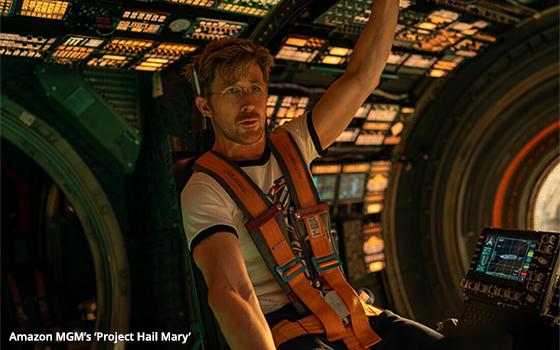
Looking to turn around a depressed theatrical movie business,
Amazon MGM’s “Project Hail Mary” added a solid $54.6 million in domestic revenue in its second week of release -- giving the movie’s overall results the best box-office revenue
of the year so far.
This follows an eye-opening $110 million opening the week before. Globally, the movie is now in excess of $300 million.
Does this give some new
perspective to a digital-first company owning and propagating from an old-school in-real-life entertainment business?
Analysts believe this original family-friendly sci-fi, real-life action
movie -- which is also not an established action-adventure comic book-based franchise -- is fueling new excitement that original theatrical movie content is still alive and well.
advertisement
advertisement
Reports
suggest the creators are already considering another edition/sequel.
Better still, it also gives hope to boosting the rise of major studio operations -- Amazon MGM -- to ascend to the
legendary status of some five studio businesses. This list includes Universal Studios, Paramount Pictures, Warner Bros., Walt Disney and Sony Pictures.
This comes amid sentiment that a
contraction of the business is underway, with Paramount Skydance in the process of buying Warner Bros. Discovery for $110 billion.
The expectation is that Paramount Pictures and Warner Bros.
will be merged into one business operation -- with one studio brand name disappearing.
Already, Paramount Skydance CEO David Ellison has said some of the Warner Bros.' strong business brands
-- like HBO Max -- will be absorbed into premium streamer Paramount+. But does that specifically mean the HBO Max brand name goes away? Ellison did not offer details.
Theater owners might be
breathing a sigh of relief that Amazon is rising -- that a digital-first owner of the longtime historically important MGM studio brand would see the major result from theatrical operation.
Amazon is now seeing major revenue gains from a business that is not focused on a screen -- mobile, desktop or TV.
It also gives some credence to the idea that Netflix -- if it had won out
as the owner of Warner Bros. Discovery -- would have continued to pursue exclusive theatrical openings of movies for just this reason:
Real life, in-person entertainment/media is an important
thing.
This is why Netflix keeps seeking more out-of-home, place-based activations, as it does in different towns with retail-based entertainment offerings -- like Netflix House, entertainment
destinations for theater, gaming, dining and retail.
Will this mean less migration of original movies to streaming? Not really. Perhaps just new careful optimization of resources of movies
into theaters --
not a football-like hail Mary pass for a touchdown.