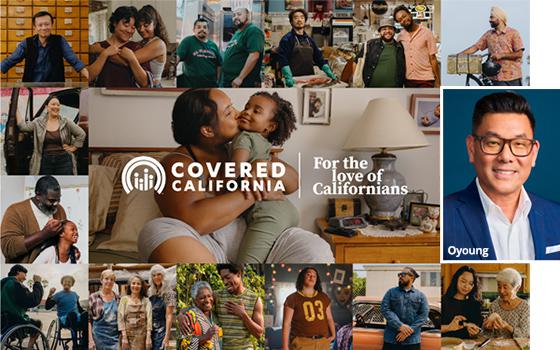
Glenn Oyoung unpacks how Covered California expanded into eight
languages, backed multicultural marketing with real investment, and why building year-round community trust matters as much as enrollment campaigns.
1. You spoke at our last Pharma & Health Summit on purpose-led marketing and targeting multicultural segments. For some brands “Culture-first" often means
one-off activations, not real commitment. What does genuine commitment look like, and what's the fastest way to spot the difference between a brand that's doing it and one that's just saying
it?
You can usually get a sense of it by looking at the work. Is the brand telling different stories that reflect how people live, or is it taking one idea and
stretching it across audiences, calling it multicultural? When the content is the same with small tweaks across languages, it tends to feel that way. It checks the box, but it doesn't always resonate.
In our experience, adapting a general market message isn't as effective as starting with the audience and building something for them from the outset.
advertisement
advertisement
The next question
is how much paid media is allocated to multicultural audiences versus the general market. In a state like California, where roughly two-thirds of the population is diverse, multicultural marketing is
marketing. It's not something you layer on at the end. When the investment doesn't reflect that reality, it can signal where the true priority lies.
A lot of
organizations still treat "culture-first" as something that shows up at the end, a moment, a campaign, a post. But if it doesn't show up in how they operate across the full customer journey, it's hard
for it to hold over time.
For us, that's meant doing more of the work from the outset. We expanded our research from four focus groups to more than twenty across the
state. We increased the number of languages we outreach in and the number of stories we're telling so the work more closely reflects the people we serve. And just as importantly, we shifted how we
invest. We rebalanced our general market and multicultural media to put more behind this work and make sure it actually gets seen. If the investment doesn't follow the intent, it's hard for even a
strong strategy or the best creative to have the impact you're hoping for.
Our new brand and creative platform, "For the Love of Californians," reflects our mission and helps guide how we decide
what work gets made and where we invest. Advertising, both creative and media, is one piece, but real commitment shows up in how you serve people end-to-end.
We've
expanded both advertising and member communications into more languages. And we're working more closely with our outreach partners across communications, sales, and other teams, not just to get people
covered, but to help them understand and use their coverage as part of our core mission to improve health outcomes.
Most brands these days will do parts of this. It's
hard to carry it through the customer journey, and that's often where the difference shows up. We're still evolving and building our approach to multicultural marketing as a brand.
2. What have you learned from expanding into multiple languages (Spanish, Mandarin, Cantonese, Korean, Vietnamese, Tagalog, Hindi, Hmong) beyond simple translation?
In short, while it's a lot of effort and expense, it's worth it. Translation alone doesn't drive performance. If the idea is generic, translating it just spreads that across more
audiences. What's worked better for us is starting with the audience and building from there, then backing it with real investment.
We've always marketed in English and
Spanish. Over the last couple of years, we expanded into Mandarin, Cantonese, Korean, Vietnamese, Hindi, Tagalog, and Hmong across both advertising and member communications. We're working to add more
languages this year. That's partly about reach, but it's also about respect. If someone prefers to engage in their own language, we should meet them there and engage in a way that reflects their
culture.
On the advertising side, we've seen the benefit clearly. When the work is more authentic, and we actually invest paid media dollars to support it, engagement
improves, media performs better, and we see a lift in trust. Beyond media, we're hearing positive feedback from community stakeholders, our enroller and agent network, and journalists. Californians
are responding to being seen and heard, which are prerequisites for us to pull alongside them and help them navigate their healthcare coverage decisions.
The other
lesson is that it has to carry through the entire experience. Expanding language in advertising helps, but if the experience breaks in member communications, you lose that momentum. We've been working
more to expand showing up authentically and in-language downstream. Beyond advertising and direct outreach, we're updating storefront materials with the new brand across these languages so the
experience feels consistent whether someone engages online, by mail, or in person.
We're still evolving. The shift has been from translating at the end to building with
intention from the start and following through across the board.
3. Special enrollment periods create a moment of urgency. How do you balance that transactional
urgency with the deeper trust-building work you're doing with multicultural communities?
Special enrollment creates urgency by definition, but we've found it works
best when it's not the only time you show up.
If the first time someone hears from you is when you're asking them to make a decision, especially in something as complex
as healthcare, it's a heavy lift. That's even more true in the communities we serve, where there can already be confusion or skepticism around how the system works.
About one in six Californians gained coverage through Covered California since our inception in 2013. And with average tenure just over a year, we're constantly introducing ourselves
to people who, in many cases, never expected to need us.
That reality has changed how we think about the work. You can't educate your way into conversions, especially
with a campaign-cycle mentality. What we've found is that you must meet people where they are, understand what they're dealing with, and build trust over time. In many cases, you're introducing
yourself long before anyone ever needs you.
This becomes even more important in multicultural communities, where context plays a big role. People come in with very
different experiences and pressures, and not everyone has the same level of familiarity with how the system works. On top of that, there's a lot of uncertainty right now that affects how people engage
with anything connected to healthcare or government. When the work starts to sound too institutional or leans on jargon and standard messaging, people tend to tune it out. It has to feel human, clear,
grounded, and connected to what people are actually going through.
For our brand, it's about holding both time horizons in mind at once. We certainly care about driving
growth during our two main campaigns, Open Enrollment and Special Enrollment, but we care just as much about laying the groundwork for the broader mission and building trust year-round.
Enrollment is one moment in time. The relationship really takes shape after that: how we welcome people, whether they understand their benefits, and whether they feel comfortable using
their coverage.
From a marketing standpoint, that means staying present outside of enrollment periods. Urgency can still be direct and clear, but it has to respect the
person on the other end.
A big shift for us has been moving beyond a short-term enrollment mindset and paying more attention to what happens after, building trust,
helping people use their coverage, retaining members, and making real progress on health equity.
4. Beyond the campaign metrics, how do you know the trust-building
work is resonating with communities?
"For the Love of Californians" and our multicultural work,"Rooted in Care" for AAPI audiences,"Made by You" for Hispanic and Latino audiences, and"Backyard" for Black and African-American audiences, are breaking performance records for us. That's been a clear signal
that when the work comes from within culture, it lands differently.
But the numbers are only part of it.
From the beginning, when we were
running more than two dozen focus groups across the state, people talked about feeling seen. In a time that feels confusing and uncertain, that meant something. In some cases, people got emotional.
You could see it from behind the mirror. That kind of reaction stays with you.
We felt it internally as well. We have a very diverse workforce, and when we introduced
"For the Love of Californians" with our spot "Declaration,"
the response across the organization was immediate and palpable. Tears were shed. Lots of them. People told us it captured why they chose to work here. That gave us confidence we were getting it
right, and we've leaned on our teammates ever since to help shape the work and keep it grounded.
A lot of how we understand what's working comes from getting out from
behind our desks. We've been spending more time with our Sales team, our Communications partners, and with agents, brokers, navigators, and community advocates to learn things we won't get from a
Teams call.
They're in conversation with Californians every day. They'll tell you what's landing and where people are still confused. That perspective has become
something we rely on.
So for us, it's not one signal. It's when all of it starts to line up: what we're seeing in the performance, what we're hearing in research, how
it's showing up internally, and what we're hearing from the field.
When that happens, you're not just seeing performance stats. You're seeing resonance.
5. Is there a purpose led brand that you admire and what are they doing that others aren't?
I admire the work my friend Yvette Peña, VP of
Audience Strategy at AARP, is doing to reach people our industry often overlooks. As someone who just entered my 50s, I feel this more personally now. Brands can fixate on younger consumers and miss
the chance to grow with people as they move through different life stages.
I started receiving AARP mailers a couple of years before I turned 50. It's a bit of a wake-up
call. You think, wait, I still feel 30. What happened? I feel like just yesterday I was racing to get back to my dorm to watch "Friends" with my roommates. But their strategy and their messaging work.
It gets your attention, feels supportive, and becomes something you consider for when the moment is right. That speaks to understanding your audience.
AARP's creative
moves away from the stock-photo, one-dimensional portrayals of aging. Instead, it shows people living full, active lives in ways that feel real. It's not the cliché version, the quick visual of
someone with gray hair rollerblading followed immediately by a jump cut to a doctor's visit. The work goes deeper than that.
At Covered California, we're trying to
reflect the full diversity of our state and the things that make us unique as people, as well as the life experiences we have in common. It's not just about reaching people when they need coverage.
We're thinking about how to start building that relationship before key life moments, like turning 26 and coming off a parent's plan, or deciding to retire early.
That
kind of longer-term, richer thinking is what makes the work resonate. It's not about a moment. It's about building relevance and brand trust over time.
If you’re
interested in submitting content for future editions, please reach out to our Managing Editor, Barbie Romero at Barbie@MediaPost.com.