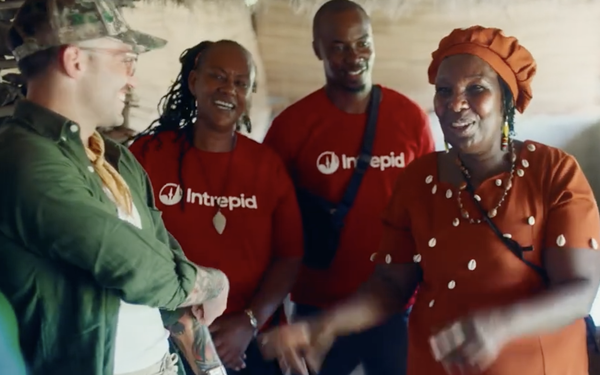
Intrepid Travel’s latest campaign
focuses on showing, not telling, travelers about the social, environmental and economic impact of the company’s tours and cause-related efforts.
The campaign kicks off with a hero film,
seen here, that highlights what the brand calls “The Intrepid Effect”: the change that is created in local communities through
travel with Intrepid.
The 1:10 film opens on sweeping mountain views in Machu Picchu, while a voiceover says, “Travel can take or it can give. Most travel leaves a footprint. This kind
leaves a future.” The film shows sites and experiences at various locales around the world, including interacting with tribes in Kenya, eating pho in Hanoi, and watching cricket in Pakistan.
“Rather than leading with aspirational claims or unverified impact metrics, which can be commonplace in the travel industry, Intrepid wants to shift the focus to real experiences and tangible
moments that travelers can see, feel and understand,” said Hazel McGuire, CMO at Intrepid Travel, in a release. ‘The Intrepid Effect’ connects experiences to real outcomes for host
communities and places, underpinned by impact measurement.”
advertisement
advertisement
The examples used in the hero film come directly from Intrepid’s itineraries, such as the brand’s e-rickshaw
city tour in India, run by the women-led not-for-profit Pink City Rickshaw, which trains women to drive and maintain e-rickshaws while also supporting drivers with financial and business literacy. The
pho in Hanoi scene highlights a meal at Vietnam’s first social enterprise, a youth training restaurant, run by the KOTO organization with which Intrepid has worked for over 20 years.
The
campaign was developed by Intrepid’s Impact team in collaboration with local teams around the world. The effort comes as both the EU Green Claims Directive and updated B Corp minimum standards
“are set to govern and reshape how companies frame their environmental and social impact,” as both organizations place “stronger emphasis on clear, accountable storytelling and
verifiable supporting data.”