While
other brands are using weaker sales as a reason to slash marketing, Tapestry keeps going the other way. The company recently announced its near $1 billion in spending on Coach’s marketing
flywheel -- a 50% increase -- generated a 31% sales gain at Coach. That includes increases of 27% in both North America and Europe, and a 58% jump in greater China, as it added more than two million
new customers and increased market share. Wall Street analysts note that those gains significantly powered profits, too, with per-share earnings climbing 62%, despite the heavy marketing price
tag.
In an earnings call detailing the results, Tapestry execs unpacked the “spend to earn” paradox, with plenty of examples of how it uses consumer insights to make sure the
company’s up-to-$500 handbags are selling out. The success comes even as other luxury brands -- including LVMH, which owns Louis Vuitton and recently reported a 9% drop in fashion and leather
goods -- are blaming a weak economy.
advertisement
advertisement
“We don't just simply say, 'Here is a bag, let's go sell it,” said Todd Kahn, CEO and brand president of Coach. “We seek out consumer
insight and craft a story that makes our brand and our storytelling even more compelling. And we don't just do that once or twice a year, we do it consistently.”
That flywheel --
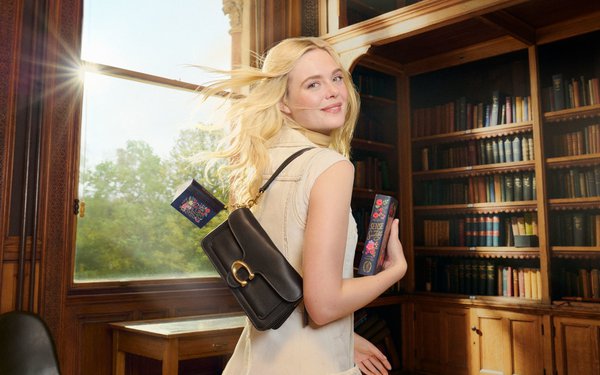
consumer insight first, story second, product third -- is behind some of the quarter’s most successful efforts. Those include the book-driven approach to “Explore Your Story,” which rendered books like a mini version of Jane Austen’s “Sense and Sensibility” as a $95 bag
charm, and an East-meets-West Lunar New Year collaboration with Clot, the Chinese streetwear campaign.
The company sees itself as sitting in luxury’s sweet spot, with an affordable
luxury positioning bringing in 800,000 new Gen Z buyers compared to last year, notes Neil Saunders, managing director of GlobalData Retail, a retail marketing research firm. But it also drew in 1.6
million new customers from other generations.
Tapestry CEO Joanne Crevoiserat pointed out that as the flywheel compounds and amplifies brand identity, it has a “reverse influence across
generations."
“Some of these are shoppers who are trading down from more expensive luxury brands into the premium space, with Coach being an ideal destination because it has a
quiet luxury vibe without excessive price points,” writes Saunders. “And some are more average customers who are happy to pay a premium for classic designs that have longevity.”
Coach’s modern spending formula -- where experience is the media buy -- showed up in coffee shops, roundtables exploring the craftsmanship and durability of the products, and expressive
luxury store redesigns that allow buyers to fully customize their bags and engage with the craftsperson. Those efforts increased “linger time,” driving higher sales in each store.
It’s all added up, noted Saunders, to a 31% quarterly sales gain for Coach, a highlight not just for the brand, “but one of the most impressive growth numbers in all of
retail.”
So far, however, Tapestry hasn’t been able to work any of the same magic at the Kate Spade division. with another 11% decline in revenues, despite a sellout of the new Duo
Mini. But the company says the “Spark Something Beautiful” campaign has increased awareness and consideration, as well as full-price sales.
“We have confidence that Tapestry
can improve the brand's results through new merchandise and fewer discounts,” writes David Swartz, an analyst who follows the company for Morningstar. But he notes it won’t be easy, and
his long-term forecast for profits at the brand is significantly lower than for Coach.
Crevoiserat said that the company will continue to apply the “magic and logic” of Coach
marketing to the snakebit brand, which she says added 400,000 new customers in the quarter. “We also know that turnarounds take time and the path to long-term growth is not always
linear.”