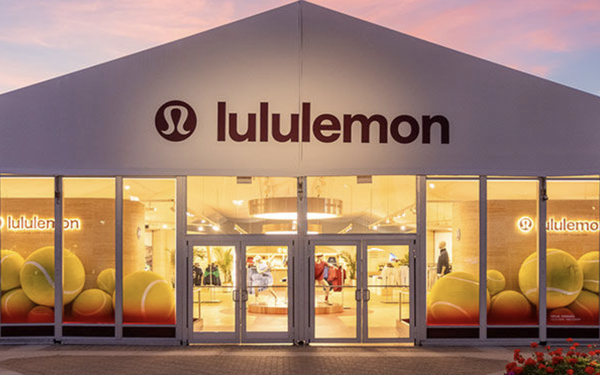
Heidi O’Neill, Lululemon’s new
CEO, doesn’t even take charge of the company until September. But looks like she will be flying straight into a simmering hornet’s nest. The company just announced that it has settled a
long-running feud with founder Chip Wilson, who has agreed to stop his incessant disparagement for 18 months, in return for naming two new directors to the board.
In its announcement, Marti
Morfitt, executive chair of Lululemon, praised the addition of Laura Gentile, former CMO of ESPN, and Marc Maurer, former co-CEO of On, who are now scheduled to join the board after next month’s
shareholder meeting.
That’s likely to make for a few awkward moments at the coffee urn, since the company did some disparagement of its own last week. Its announcement said any of
Wilson’s nominees would “significantly downgrade the Board’s skills and expertise.” That's a fairly acrobatic pirouette for a company that sells yoga pants.
advertisement
advertisement
For anyone
tuning in late to this chapter of the Disgruntled And Aggrieved Billionaires’ Club, Wilson has been unhappy with Lululemon’s performance for more than a decade. He left his active role at
the company he founded in 2013, following a massive PR gaffe during a recall of 17% of its leggings. He implied that if women had a problem with Lululemon, they were probably too fat. The following
year, he sold half his shares to Advent International for $845 million. And then in 2015, as boardroom tensions over quality and the brand’s mission continued, Wilson stepped away entirely.
Wilson still owns about 8.6% of the company, which he founded in 1998.
Since then, Lululemon noted -- pre-truce -- he has spent 10 years, “attacking the company and the Board, even
when the company’s performance was stellar.”
The company criticized his “long-standing personal grievances, desire to regain influence and outdated perspectives about how to
position Lululemon,” as well as troubling conflicts of interest. Among his favorite weapons: full-page ads in the Wall Street Journal and billboards in Vancouver. He aimed his
kvetching right at the top, at “finance focused CEOs [who] don’t know how to attract or motivate creative talent, and even worse, they think they understand great product when they
don’t.”
(Wilson is also fond of using billboards outside his $82 million home to criticize local politicians, which are
occasionally defaced by graffiti like, “Selfish Billionaire Lives Here.”)
The company didn’t have an easy time of it in the post-Wilson era. Laurent Potdevin, appointed CEO
in 2013, resigned abruptly in 2018 following allegations of workplace misconduct. Lululemon paid him $5 million to leave and not sue. (Such nice people.)
Calvin McDonald replaced him. But last
year, following stepped-up criticism from Wilson and a dizzying 50% drop in the company’s stock price, as it tried to battle newer brands like Alo Yoga and Vuori, McDonald stepped down in
December. Hectoring from Wilson, who was demanding a voice in the search process, slowed things down. And when Lululemon announced Heidi O’Neill’s appointment in April, Wilson responded
with a letter to shareholders criticizing her appointment.
"Now more than ever, the next CEO needs brand and product support on the board to help attract leading talent and deliver a
turnaround," he wrote. "Unfortunately for Heidi and shareholders, this support is clearly not currently represented on the Board."
Wilson, who had also asked for the expenses of his proxy
fight to be covered, agreed instead to have Lululemon make a donation supporting athletics, art, and landscaping at Kitsilano Beach in Vancouver, where the company was founded.
The company
also agreed to add a third director in September, making sure it would be someone with product experience.
Lululemon’s stock price rose a bit on the news, and observers expressed relief
about the averted showdown. And it’s hard to disagree with Wilson’s contention that the company has lost its cool factor. But what happens next is far from certain.
The most
important part of the deal is the eighteen months of relative silence it imposes on Wilson, writes Neil Saunders, managing director of Global Retail Data. This deal prevents shouting from the
sidelines and buys Lululemon breathing room to set out a turnaround plan in motion. “But none of it solves the issue of how to take the brand forward,” he notes. “For that to happen,
there needs to be much more innovation around product, a return to discipline in the assortment, and a focus on rebuilding the credibility and status of the brand.”
Wilson gets his
board seats. Lululemon gets its silence. O'Neill gets the rest. Let’s hope she’s getting hazard pay.