“Rage, rage against the dying of the light,”
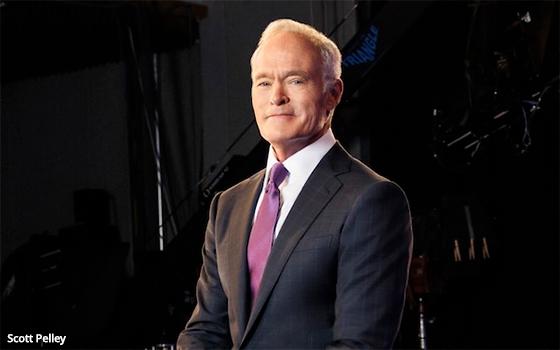
wrote Dylan Thomas -- an apt line of poetry for the way Scott Pelley left CBS.
He did “not go gentle into that good night.”* Instead, whether he realized it or not, he
took up an old newspaper credo that said if you want to burn a bridge, do it in style -- leave no doubt about what you mean and whom you are referring to.
Then place it prominently on an up-front news page with a headline in 90-point type. Damn the torpedoes.
Pelley likely realized he would be fired -- and might not have particularly cared -- when he laced into the newly appointed boss of “60 Minutes,” Nick Bilton,
at Bilton’s first meeting with “60 Minutes” staff on Monday.
advertisement
advertisement
A statement Pelley released on Instagram on Wednesday, the morning after he
was fired for his conduct at the meeting, indicates that for him, the writing was on the wall. And so, he let fly.
In the statement, he blasted CBS News management for removing senior leadership, including terminating Executive Producer Tanya Simon.
“Last month, ‘60 Minutes’ lost its DNA when our entire senior leadership and two of our best
on-air correspondents [Sharyn Alfonsi and Cecilia Vega] were cruelly fired without cause,” Pelley wrote. “Good people were silenced. … They stood for fairness against the forces of
political bias; they stood for professionalism against chaos.”
He accused CBS management of
“incompetence and unprofessionalism.” He said “the collapse of values at the top has become untenable.”
“The leadership of
‘60 Minutes’ is no longer recognizable. The principles I hold dear are gone, and so I must leave as well,” Pelley said.
Earlier, at the Monday meeting,
Pelley’s attack on Bilton erupted before Bilton could get two words out of his mouth.
He confronted Bilton on the firings and questioned Bilton’s
qualifications for the role of managing and leading “60 Minutes.”
Indeed, Bilton, 47, had no experience whatsoever in network TV news when he was
appointed to head “60 Minutes” last week by fledgling editor in chief Bari Weiss.
In his attack at the Monday meeting, Pelley also accused Weiss,
who was not there, of “murdering” “60 Minutes.”
Pelley, 68, started at CBS in 1989, and earned promotions throughout his career. His
positions in the news division included chief White House correspondent, anchorman on “CBS Evening News” and years of reporting for “60 Minutes,” the most successful news
program in the history of television.
Pelley may be the last of the square-jawed TV anchormen who typified the gravity and seriousness of network news in an
era when working in a network news division represented the pinnacle of a career in broadcast journalism.
Now, the values he championed and grew up with in his career are
seen more and more as anachronisms.
Rather than accept that sad fact, Pelley chose to make his exit in a blaze of glory.
*Do Not Go
Gentle Into That Good Night
By Dylan Thomas, published in 1951
Do not go gentle into that good night,
Old age should burn and rave at close of day;
Rage, rage against the dying of the light.
Though wise men at their
end know dark is right,
Because their words had forked no lightning they
Do not go gentle into that good night.
Good men, the last wave by, crying how
bright
Their frail deeds might have danced in a green bay,
Rage, rage against the dying of the light.
Wild men who caught and sang the sun in
flight,
And learn, too late, they grieved it on its way,
Do not go gentle into that good night.
Grave men, near death, who see with blinding sight
Blind eyes could blaze like meteors and be gay,
Rage, rage against the dying of the light.
And you, my father, there on the sad height,
Curse, bless,
me now with your fierce tears, I pray.
Do not go gentle into that good night.
Rage, rage against the dying of the light.