Campbell’s, which just reported a 4%
drop in sales in the third quarter to $2.4 billion, is facing some “tough” decisions on its struggling snack brands. While cash-strapped consumers are helping some parts of its business --
including a strong preference for eating at home and hacking recipes that allow them to cook from “semi-scratch” -- they’re turning thumbs-down on snacks.
The company
believes many of its brands, including Campbell’s, Rao’s, and Swanson, will continue to benefit even in a softer economy, thanks to the durability of cooking-at-home trends.
Consumers don’t just want affordability, President and CEO Mick Beekhuizen told investors in the company's earnings call. “They are also seeking the comfort, flexibility, and
personalization that come with preparing meals at home. Digital ordering and the social media-enabled recipe hack culture add convenience and creativity in a way that was never possible.”
advertisement
advertisement
Beekhuizen told investors that as the company tries to increasingly put consumer preferences front and center, launching innovations “will involve some tough decisions, and may include
rationalizing our product portfolio, reallocating and prioritizing investment for certain brands, and consolidating nodes within our network.”
Some observers are impressed by the
company’s willingness to maintain investments in marketing and product innovation despite constrained consumer spending. Erin Lash, an analyst who follows the company for Morningstar, calls that
commitment to brand investment prudent. “This is evidenced in Rao's as consumption rose 15% despite its premium positioning,” she writes.
And while the company outlined plans for a
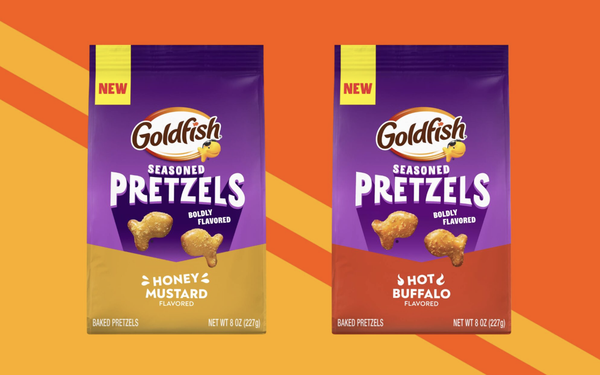
new ad campaign that it hopes will pep up its ailing Goldfish empire, it may shrink a snack portfolio that includes Kettle, Cape Cod and Late July chips, as well as Snyder’s pretzels. That
division saw a sharper quarterly sales decline, falling 6.2%.
Problems at the Goldfish division are stabilizing, down 0.9%. “We are seeing encouraging signals from our decision to return
the brand’s strategy to its legacy as a leader in snacking for families with kids,” said Beekhuizen.
And Goldfish “held dollar share, and multipacks grew 6% over the past 13
weeks,” notes Lash, “showing pricing, mix, and pack-size strategies can steady demand.”
Plans call for summer and back-to-school merchandising for the brand and a recent
collaboration with Pokémon to celebrate its 30th anniversary. And the company is readying a new ad campaign, reprising its classic “the snack that smiles back” tagline.