
With the Cannes Lions Festival about to begin, Pharma &
Health Insiderspoke with two Omnicom execs who will help choose the most creative campaigns in the Pharma and Health & Wellness competitions.
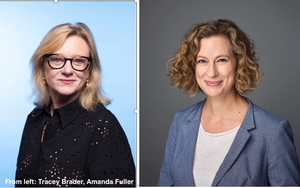
Tracey Brader, chief strategy and
innovation officer at Omnicom’s Remedy Edge UK, is this year’s Pharma jury president. Amanda Fuller, managing partner of Omnicom Health Oceania, is making her debut as a Health &
Wellness juror.
This Q&A has been edited for length and clarity.
Pharma & Health Insider: Amanda, the Cannes juries have already spent weeks winnowing
down long lists of entries into short lists from which the winners will be named. What pharma trends have you seen so far?
Amanda Fuller: First, tech as an extension of new
product/service offering for brands has become essential to add value or differentiate.
advertisement
advertisement
Second, inclusivity is now a baseline expectation. Work that tries to fake it stands out for the wrong
reasons, while brands that act from a place of genuine inclusion are the ones that shine.
Third, when a partnership / talent is the idea rather than being a component of the idea, the brand
impact is off the charts.
P&HI: Tracey, what are your thoughts on pharma trends?
Brader: Trends tend not to be year on year, but to emerge over a longer
period of time. Our audiences -- from patients tothose professionals that manage them -- do not exist in a vacuum, so changes in generalmedia consumption apply here too.
People
are time-poor, rely on AI to speed decisionsand, in some ways, have become tougher customers to influence. But that’s whatmakes the role of agencies -- and the talent within --
still relevant today.
Which leads toanother trend that I have observed: the capacity of work to drive “ABC”change: in action, beliefs, or character. When I
curated my playlist for Cannes of work that had moved me, I found myself drawn to work that had a utility to shapebehavior -- and that is as important in Pharma comms as in the Grand Prix for
Good [a Lions award that honors work done for nonprofits and public service].
P&HI: What about AI as a trend?
Brader: As everyone is talking about AI, I
would like to applaud the work that was entered that celebrated “traditional” crafts, and thinking that was more lateral than is possible when we rely on “artificial’
intelligence.”
Fuller: I expected AI to be overbearing, but have been pleasantly surprised at the [careful] and fit-for-purpose use of AI. As an industry our experimentation has
moved at lightning speed to become “AI as part of the toolkit.” That’s so impressive.
P&HI: What are you seeing geographically, in so far as North America no longer
necessarily being the center of ad creativity?
Brader: This is not to decry work coming from North America, because the importance of this market needs no further comment from me.
And may indeed be the originating “home” of many of the winning entries.
But it is important, as the jury, to look at work from across the world – and not judge this through
NA eyes. Fortunately, the wider global entries make that a pleasure as there is lots of innovation from wider geographies to savor.
Fuller: The work from across the globe has been
exceptional. From the tiniest markets comes big and bold thinking. You just need to look at the shortlist for Glass Lions to see how work that’s pushing our industry forward is coming from
everywhere. [The Glass Lions reward work that “shatters sexual stereotyping, confronting prejudice and inequality through progressive, socially conscious representations of gender and
marginalized communities.”]
Tracey, you were a Pharma juror in 2024. What was that experience like?
Tracey Brader: Being in the judging room was a brilliant
experience -- not least because I learned so much in the process, reviewing high caliber work alongside some of the best talent in our sector.
P&HI: How did that experience
affect you and your agency?
Brader: One of the benefits of Cannes is what happens between the annual ceremonies. The entries lauded each year are widely shared to become both the
source of inspiration and the new benchmark to challenge agencies to go further. This in turn raises the quality of work we produce and, let’s hope, the entries in subsequent years.
P&HI: How has it felt to now be president of the Pharma jury?
Brader: This is not a responsibility to be taken lightly. You owe it to your industry, those around you
and yourself, to use this opportunity to raise the standing of our sector. In some ways, just reviewing the long list makes you excited for what’s to come.
P&HI: What have you
learned from past presidents about setting a tone in the jury room and getting the job done?
Brader: I have only experience of one president, Collette Douaihy [currently chief
creator office of CG Life, then with Dentsu.] Collette kept us to task but ensured equal and active participation by all. The vibe in the room was “strong views, loosely held,” so everyone
felt safe voicing their opinion -- but equally felt respected for seeing others’ points of view.