It's no secret that economic
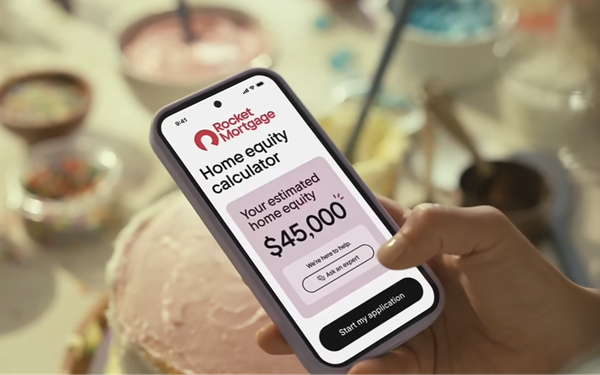
pressures are weighing heavily on American consumers, with current credit-card debt topping a record $1.277 trillion by the end of last year. Rocket Mortgage wants to ease some of that debt load, with
a new campaign positioning home-equity loans as a solution.
Rocket Mortgage's spots highlighting the anxiety consumers already feel about too-high credit card
balances -- like tossing and turning in bed, or being afraid to open a credit card
statement. And they make it clear that with a second mortgage from Rocket, people can make a clean start.
The average credit card interest rate is 21%. By
contrast, home equity loans range from 5.76% to 10.75%, according to Bankrate, with an average just over 8%.
advertisement
advertisement
The campaign comes as the company continues to
position itself less as a lender and more as a personal finance partner. "Rocket used to be in the credit card business but left the sector to focus on helping clients build wealth instead of
financing debt," notes CMO Jonathan Mildenhall in the release. "The truth of high-interest debt is something your credit card company doesn't want you to hear: the longer it takes to pay it off, the
more money they make."
Instead, Rocket is encouraging consumers to take out second mortgages to pay off those debts, noting that Americans hold a record $17.6
trillion in home equity, citing estimates from ICE Mortgage Technology. "We want to tell America's homeowners they have a way out. The equity they've built can break the cycle and potentially save
them thousands of dollars," Mildenhall added.
The company, based in Detroit, says it will release new research on the financial and physical impacts of
high-interest debt, sharing stories of homeowners who have broken free. Later this month, Rocket experts will host a Reddit Ask Me Anything to answer consumers' questions about debt.
The campaign sidesteps a critical question for some consumers, however: an increasing number aren't likely to be able to "wipe the slate clean," since they are
relying on credit cards to pay for essentials not covered by wages or savings. A new study from the Urban Institute reports that one in four working-age adults routinely use credit cards for food and
then face repayment challenges. One in 10 are using Buy Now, Pay Later options to pay for groceries, and among those people, a third have missed a payment. And 5.2% have used cash from a recent payday
loan to purchase groceries.