Eli Lilly’s revenues soared 48%
year-over-year to $23 billion in the second quarter, with more than half those bucks coming from Mounjaro and Zepbound, the pharma giant’s twin GLP-1 injectable drugs.
Mounjaro, for type
2 diabetes, brought in $9.9 billion, up 91% year-over-year. Zepbound, for weight management alone, reached $5 billion in sales, up 46%.
Lilly continued its strong lead over Novo
Nordisk’s respective Ozempic and Wegovy drugs in the GLP-1 battle, with Lilly CFO Lucas Montarce telling analysts on an earnings call that Lilly products accounted for 60% to 70% of GLP-1
prescriptions in Q2.
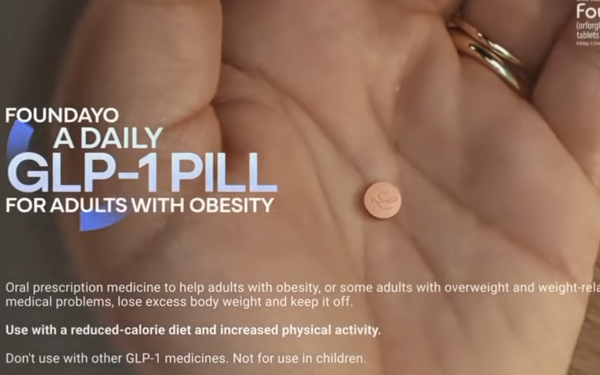
Those products now include the oral pill Foundayo, which launched in April and “began broad direct-to-consumer marketing to raise consumer
awareness” two months later, Lilly Chairman-CEO Dave Ricks told the analysts. (Examples of Foundayo ads, which counter Novo’s Wegovy pill by emphasizing it as “the only GLP-1 pill
that can be taken any time of day with no planning around food or drink,” can be seen here, here and here.)
advertisement
advertisement
Foundayo’s initial quarterly sales totaled $98
million.
And Lilly is hardly finished on the obesity drug front.
The company is deep into clinical trials for retatrutide, which it hopes to submit for FDA
approval next year. “In patients with diabetes and obesity who typically struggle to lose weight, “retatrutide delivered a magnitude of weight loss not previously seen,” Dr. Dan
Skovronsky, Lilly’s chief scientific and product officer, told analyst.
Outside of those participating in retatrutide clinical trials, STAT News and Reuters reported
earlier this week that Lilly would offer “early access” to what a spokesperson termed “a limited number of patients who meet specific medical criteria.”
Earlier this summer, STAT News had broken the story that, back in April, a National Institutes of Health clinician had requested special access to the drug for a single 79-year-old
patient, leading to speculation that the person in question was then-79-year-old Donald Trump. The White House denied the allegations.
Lilly on Wednesday also increased its full-year 2026
guidance from $82 billion-$85 billion to $85 billion-$87 billion.