During its recent earnings call, Amazon announced
plans to increase its 2026 capital expenditures budget to $220 billion.
Andy Jassy, the company’s CEO, said the investment is needed to expand data centers and add artificial
intelligence (AI) capacity and tools.
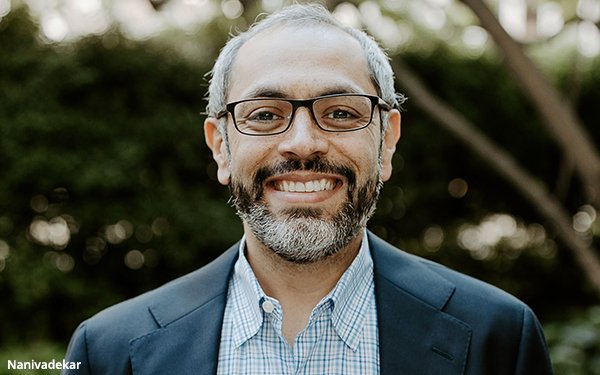
Nikhil Nanivadekar, principal engineer of generative AI at Amazon Ads, is one of those engineers building out features leading the company’s ad
department into agentic, audio, images and video.
Most recently, he presented Jassy with a project that would combine customer experiences with AI to create something new.
“I do
not know any other company where you can write a two pager and suddenly have a product surfaced to hundreds of thousands of advertisers,” he told MediaPost, calling some of his projects early
pipe dreams. “That’s what drives and energizes me.”
advertisement
advertisement
He presented a different idea in another “two pager” to the senior vice president of advertising in June 2024
that explained where he thought generative AI and agentic tools were headed, even before agentic was a thing for advertising.
Amazon Ads originally debuted an unnamed "agentic AI
tool" in Creative Studio in September 2025. The company then rebranded it to “Creative Agent," relaunching it during its annual unBoxed 2025 conference in November that same year.
Creative Agent is one product Nanivadekar and his team created, along with Image Generator, and Video Generator.
The ecommerce ad tool, Video Generator, was first introduced and launched in
beta in September 2024. After nine months of testing, and a significant upgrade, it relaunched in the U.S. in June 2025.
"The world of innovation evolves so fast that there are times when you
can step out from a meeting and there's a new model or a new way to build solutions," Nanivadekar said. "One of the biggest things is understanding whether we should jump on this trend train. Will it
become something different for customers?"
One of the major changes is how engineers think about software and infrastructure.
Software has become disposable, Nanivadekar said, but the
systems that run the software are not. The customer does not care. They just care that the output is done well. Nanivadekar alluded to the advertising industry going through a “paradigm
shift” related to AI. A set of “Lego blocks where we can lift, swap and shift things” like what’s inside Amazon’s AI Video Generator.
Nanivadekar studied
mechanical engineering with a focus on robotics, then moved into software after earning his master’s degree. He spent more than a decade on Wall Street before joining Amazon Ads in June 2022,
bringing together experience in mechanical engineering, software development, finance and big tech.
“I didn’t even know the jargon of advertising, but I knew code,” he said.
“When I joined Amazon, I focused on organic experiences.”
When generative AI in 2023 became a thing in advertising, some employees, including Nanivadekar, were asked
to take on a new opportunity that at the time sat on the bleeding edge like prompting.
“I’ve always loved to learn,” he said. “I follow a principle of
not following trains. You don’t want to have to jump on the train or have a feeling of missing out because you’re late.”
It’s about inventing your
way out of problems, and that’s the beauty, he believes, of working at Amazon Ads.
AI combines everything Nanivadekar is passionate about.
"At a company this size,
ideas are everywhere," Nanivadekar wrote in a LinkedIn post. "Most don't make it. The ones that do? They remove friction and simplify how people work — not just what they do."