Consumers continue to show
a greater interest in vehicles powered by hybrid engines.
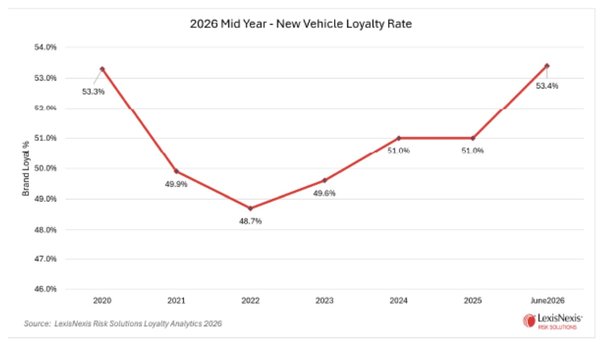
New vehicle brand loyalty climbed to 53.4% in the first half of 2026, according to the latest LexisNexis Risk
Solutions Automotive Brand Loyalty Study.
The mid-year 2026 results show an increase of 2.4 percentage points over 2025. This upward trend underscores stronger consumer
retention as auto market conditions stabilize and inventory levels normalize.
LexisNexis Risk Solutions data scientists employed proprietary loyalty methodology to analyze
consumers’ vehicle purchases, which brands are in garages and whether the same brand were purchased.
The biannual study indicates that automakers must continue to compete for
market share in an automotive landscape transitioning away from gasoline-powered engines.
advertisement
advertisement
A key factor in vehicle brand loyalty over the last several years has centered on fuel
type. The cessation of the electric vehicle government incentive tax credit in September 2025 changed the market dynamics of EV brand loyalty.
Between January and September 2025, EV
purchases made up 10% of new personal EV sales. Post-September 2025 – mid year 2026, that figure fell to 7.4%. EV owners did not replace their electric vehicle with another, dropping the loyalty
rate to 60%, from 68.8% in 2025.
Hybrid vehicle owners demonstrated a 56.5% brand loyalty rate, reinforcing the growing importance of hybrid offerings in maintaining customer
relationships.
During the same period, gasoline repurchases surged briefly, following the EV tax credit end, before returning to prior levels.
The mid-year
2026 results point to an improving brand loyalty market that remains influenced by external forces, including incentives and shifting fuel preferences.
To determine a loyalty
rating, the loyalty methodology used the percentage of garages that acquired a vehicle of the same model or brand. A loyalty rate of more than 50% indicates buyer brand loyalty retention with the same
brand versus a competing brand.
Tesla regained the top spot in brand loyalty, reaching 63.9%, an eight-percentage-point increase from the end of 2025. It leads a group of nine
brands that exceed the industry average. The four brands immediately behind Tesla had loyalty rates ranging from 62.6% to 59.3%.
In 2024, Tesla held the number one position with
59.7% brand loyalty. In the first half of 2025, its rate fell to 51.7%, well below peers in the category, and closed the year at 55.4%.
A resurgence in Tesla brand loyalty in
the first half of 2026 is a good example of how total cost of vehicle ownership and market fluctuations in consumer preferences for automotive brands can drive shifts in brand loyalty, creating
uncertainty for automakers.