Elon Musk knows a lot about a lot of
things, but he doesn't seem to understand how boycotts -- especially advertising boycotts -- work.
"Conspirators in a group boycott generally work hard to cover their tracks," his
lawyers argue in a filing this week with the United States Court of Appeals for
the Fifth Circuit, "But here, whether out of unfamiliarity with U.S. antitrust law or simple self-righteousness, the conspirators occasionally said the quiet part out loud."
The appeal,
which goes on to make a case that those participating in it were "brazen" enough to let the world know about their participation in it, reveals that he is ignorant of what boycotts actually are:
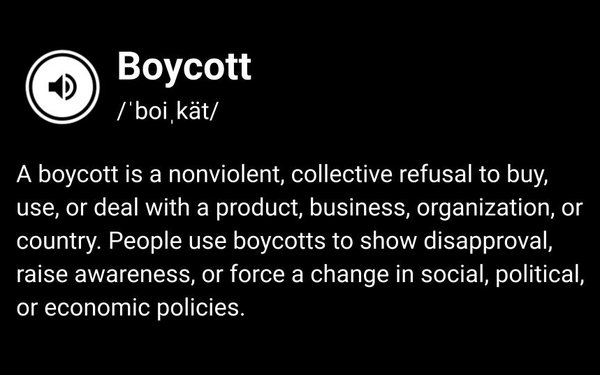
"nonviolent, collective refusal to buy, use or deal with a product, business, organization or country."
advertisement
advertisement
That's the literal definition, which goes on to say that "people use boycotts to show
disapproval, raise awareness, or force a change in social, political or economic policies."
In other words, boycotts about saying the not-so-quiet-part out as loud as the participants possibly
can. That's the whole point of boycotts in general, and advertising boycotts in particular.
They don't always work, of course. Remember when some of the world's largest advertisers staged a
boycott of Meta's Facebook in July 2020? They spoke loudly about boycotting the social-media platform, because they wanted to get it to change its policies to make the platform a safer place for
people, and the brands looking to reach them there.
And they were utilizing their free speech -- or what some industry experts might characterize as "free commercial speech" -- to force a
change in Facebook's less-than-rigorous content-moderation policies.
Like I said, sometimes boycotts don't actually work. In the case of Facebook, its revenues actually increased, not
decreased during the quarter, but that was because the big national advertisers boycotting "the social network" actually only represent a tiny share of its revenue, which comes mostly from smaller and
medium-size businesses.
Even more ironically, Facebook parent Meta got rid of its content-moderation policies several years later -- at the start of Trump's second term, following the
"community notes" model adopted by Musk's X platform.
The reality is that advertising boycotts have been high-profile, very out loud, and widely used for at least half a century, starting with
Reverend Donald Wildmon's boycotts against the major television networks in the 1970s through the 1990s, and they've targeted questionable media platforms from Howard Stern's radio show to the WWE's
wrestling programming, and none of them ever triggered an antitrust suit based on the participants being brazen or speaking about them out loud.
Perhaps the biggest irony of Musk's legal
attacks against the ad industry is that while it has been effective at getting advertisers to stop talking about X, it hasn't prevented them for discontinuing advertising on the platform.
According to the first public data since Musk took Twitter private and
rebranded it X -- ultimately making it part of his publicly traded SpaceX business -- ad spending on the platform has plummeted to a tiny line item.