It’s been five years since RushTok
burst on the scene, and brands are still trying to figure out the best way in. Kotex is one of the latest, helping PMNs (that’s potential new members to you non-Greek speakers) not just to
“own their flow,” but to own the moment.
Kotex is handing out a ticket to stock sorority houses around the U.S. with feminine care for the year. PNMs can show their bid cards to
unlock free Kotex pads and pantyliners, helping to put a year’s supply of period protection in the hands of sorority sisters nationwide.
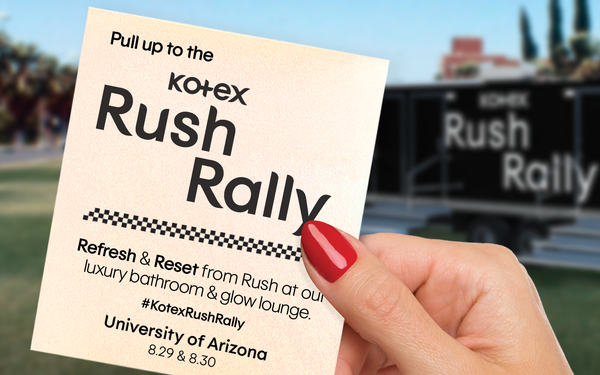
The kickoff also includes an activation at the
University of Arizona during Rush Week, with the KX VIP Lounge on Greek Row. For two days, it will offer a bathroom break and an air-conditioned respite, with a “Glow & Go” station
equipped for hair and makeup touchups, and a “Flowbar” station with Kotex product recommendations and selfie mirrors.
advertisement
advertisement
Nicole Pawlukowsky, vice president and general manager of
marketing, tells Marketing Daily the campaign activation came from the insight that one of the most stressful elements of rush is that taking a bathroom break during the marathon social
engagements might send the wrong signal.

Rush, with its long days, nervous moments and tiring walks from house to house, is a moment when women could use some extra help, she says. Rush etiquette can be baffling, and young women worry
that sneaking off to the restroom -- to pee, to fix their makeup, or freshen up their period product -- might signal disinterest. The brand saw an opportunity to make it better.
The bathroom
insight was a breakthrough. "You want to spend every moment talking to the other women, maximize your time and learn what the house is all about,” she says. Offering her a little restroom oasis,
she said, “felt like it could be a really powerful way to make her comfortable, and let her cool off.”
Rush itself can be polarizing. To many people, sororities stand more for
exclusion than sisterhood. And for a brand that has invested heavily in promoting inclusion, that presents a risk.
“Rush might not be for everyone, and we completely acknowledge and
support women who might not want to be a part of the process. But we wanted to support women who do,” Pawlukowsky says.
Separately, new research from MMC, a PR company, finds
that young women are evaluating rush differently. Increasingly, they are viewing rush as a resume builder as well as a social experience. They're also a little conflicted about what they see as brands
and creators cashing in.
About four in 10 of rush conversations focus on the cost of participating, including initial fees, membership dues and housing. And more are relying on rush coaches,
who can charge as much as $6,500 for their services.
“For brands, that creates an important tension,” MMC notes, in a preview of its upcoming report. “Rush is undeniably a
high-attention cultural moment, but participation increasingly sits inside a conversation about affordability, access, and the commercialization of belonging. Brands that enter the space may need to
think beyond visibility alone and consider what their presence signals about who gets to participate, who benefits, and how value is being defined.”