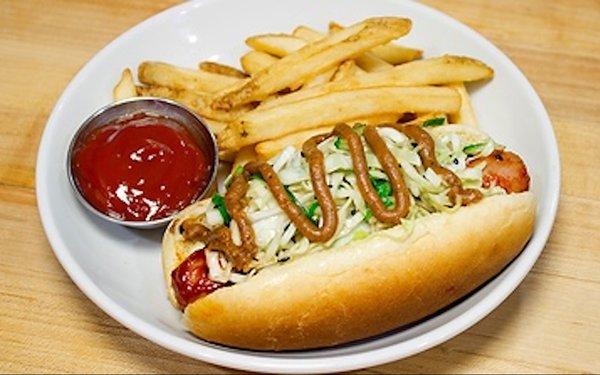
Hormel is teaching its Spam Dogs some
new tricks. The company has announced a partnership with OTG, the airport hospitality group, offering visitors at the Minneapolis–Saint Paul International Airport early access to new menu
items ahead of its Minnesota State Fair debut.
The company, which announced the Spam Dog earlier this year, is cooking up some elevated offerings.
There’s the Mill City’s
Gochujang Spam Dog, glazed with gochujang, topped with crunchy scallion slaw and Thai peanut drizzle, as well as a battered Spam dog for fair purists. There’s Shoyu’s Spam Fried Rice,
which contains a diced Spam dog with Maggi glaze.
Playful plates don’t just show off the company’s famous culinary-ambition-meets-sense-of-humor. It also reflects the
company’s increasing desire to stay relevant to stressed-out consumers, who are actively redefining what value means.
advertisement
advertisement
In an earnings call with investors this week, President and
CEO-elect John Ghingo acknowledged that the environment is not improving. “Consumers are still feeling quite strained with low sentiment, with high fuel prices contributing further to that
strain,” he said. “That being said, consumers continue to prioritize food. Overall demand for food remains resilient. And while consumers are demonstrating resilience, they're also
coupling that with flexibility.”
That means they are increasingly focused on optimizing for value, “not just in the sense of the lowest price point, but of being more deliberate
with their dollars.”
The company’s protein-centric portfolio, he added, offers plenty of opportunity, delivers great value propositions for breakfast, lunch, dinner, snacking,
convenience and affordability.
For the third quarter, the Austin, Minnesota-based company’s sales slipped 2.4% to $2.96 billion, from $3.03 billion a year ago.
But those results
reflect the impact of portfolio moves and lower commodity-based pricing, not just consumer stress.
Several retail priority brands -- including Spam, Applegate natural and organic meats and
Hormel chili -- delivered growth, as did its foodservice division.
The results surprised investors, and not in a good way. But Kristoffer Inton, an analyst who follows the company for
Morningstar, thinks the market overreacted. He called the unexpected sales decline a “disappointment,” but noted that “the underlying weakness isn't as bad as it looks, as most of
the decrease came from portfolio actions and response to price increases.”
And he adds that Hormel’s exits from more “commoditized businesses should help stabilize
results over time.”