When Hometown Food Company bought Chef
Boyardee for $600 million last year, it was easy to see why Conagra wanted to get rid of it. The antique brand might be a household name, but sales had been declining for years, as consumers got
hungry for fresher, less processed foods. It was less clear why any company would want it. But as the brand rolls out new products, packaging and a “Now we’re cheffin’” ad campaign, Dan Anglemyer, COO and CMO, sees nothing but runway ahead. He tells CPG Insider about
the brand revival.
This interview has been edited for length and clarity.
CPG Insider: First, explain the acquisition strategy. What did Brynwood Partners, the
private equity firm that owns Hometown Food, see in this 98-year-old brand?
advertisement
advertisement
Dan Anglemyer: Brynwood is a value investor, and it tends to buy undermanaged and unloved brands and breathe
life back into them.
The first year, we had to take control of the business: the plant, operations, warehousing, shipping. And in parallel, we were doing product development.
Of
course, we appreciate the iconic red can. But we feel the brand can stand for so much more. As we looked at adjacencies and even within the category, we identified a few different areas and moved very
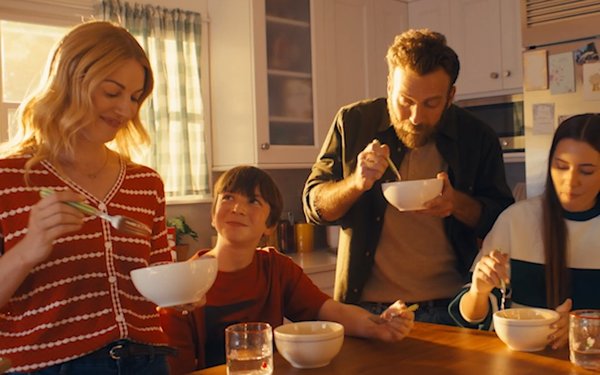
quickly. The first piece is skillet meals, with five varieties, and that’s what the first wave of ads supports. We want to pivot from being a meal of last resort to the first choice for
families. These are convenient and a great starting point -- you can add your own flair to it. And with our Italian heritage, we feel that we can do that uniquely.
CPG Insider:
What’s next?
Anglemyer: With the rise of GLP-1s, we see plenty of opportunity in protein. We're launching a line of canned meals, all with at least 25 grams. This trend has legs,
especially at our more affordable price points.
CPG Insider: Talk to us about prices. Consumers, especially at lower income levels, are so strained -- not just with grocery costs, but
housing, energy, healthcare. Where does Chef Boyardee fit? Are you going up against brands like Progresso and Campbell’s?
Anglemyer: Ultimately, yes, we're going to be competing
against soups. We’ve got such a large share of the canned pasta dinner category. We’ve always been affordable, but right now, we’ve got a triple whammy: the cost of steel, beef and
freight affects everyone in the industry. We believe we have a great serving size for what we charge, but we're not going to downgrade product quality to stay ahead of inflation.

CPG Insider: You’ve worked at Kraft and
Mondelez. How has it felt to take over for -- no offense, please -- a loser brand?
Anglemyer: I have a saying that there are no tired brands, only tired brand managers. I've dealt with
a lot of turnaround situations, and there's always a way. It’s about understanding the consumer, the category, what retailers need, and acting quickly. We can do that and bring an
entrepreneurial culture to the brand that it didn’t have before. We’ve done more innovation in a year than it had in the previous five. And the last major ad campaign for the brand was in
the early 2000s.
CPG Insider: Explain the ad strategy.
Anglemyer: We’ll spend around $10 million. We’re doing 15-second and six-second spots, and trying to
get as much reach as possible, focusing on new products, including skillet meals, canned high-protein meals and a third platform launching early next year. We’re leading with the new products
while tapping the brand's latent understanding.
Because we over-index in the Southeast, we’re also doing NASCAR.
We’ve also introduced new packaging across the portfolio,
prominently featuring the chef Hector Boiardi. Previously, the packaging was almost apologetic. And down the road, the packaging will create opportunities to change the perception of freshness.
We worked with Little Big Brands on the redesign and felt the team understood the brand so well that we used them for the full campaign.
CPG Insider: What metrics matter most to
you?
Dan Anglemyer: With a private-equity owner, ROI is paramount. But people need to be aware of these products before they can try them -- and we’re trying to entice them to try
us. There's a lot of latent appreciation for the product, and it's up to us to reignite that flame and bring it back in a modern way.
Our biggest challenge is moving people from “I used
to buy it” to "Hey, I'm gonna try it.”