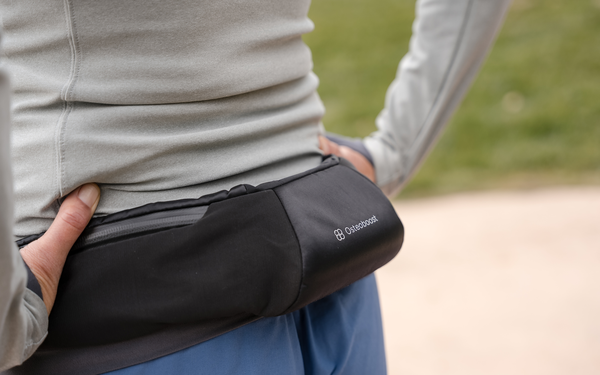
Osteoboost, the only prescription wearable device for low bone
density (osteopenia), recently launched its first TV spot after a year in the market.
To reach an
audience of postmenopausal 50+ women, the spot has been running in prime time and weekend daytime on linear cable and over-the-air networks such as Antenna TV, Court TV, Hallmark Family, ION Mystery,
Ovation and Reelz.
The ad, which debuted earlier this month, was produced in-house, with media placement by DirectAvenue.
After having advertised previously predominantly
on Facebook, the brand achieved its highest weekend sales ever this past weekend, Osteoboost CEO Laura Yecies tells Marketing Daily.
The spot explains -- and backs up via data from
clinical trials -- that Osteoboost, worn around the waist for 30 minutes daily, uses “gentle vibration targeted to your spine and hips” to reduce bone density loss.
advertisement
advertisement
Osteopenia,
Yecies explains, is a “very, very common condition” affecting about 60 million Americans and “as common as high blood pressure, high cholesterol and diabetes.”
Indeed,
she notes, osteopenia can be seen as a precursor to the more serious osteoporosis. just as prediabetes can lead to diabetes.
While half of women over 50 will suffer a fracture from low bone
density. she notes, the problem also applies to one in four men.
“With women, it’s tied to menopause,” she elaborates. “When you lose estrogen, you begin a period of
very rapid bone loss, and half of all women over 50 will have a fracture from low bone density."
Unlike with other conditions like diabetes, Yecies says, the airwaves are not filled with ads
for treatments of bone density loss, partly because “the drugs are [not new] for the most part.”
As for usage, “the drugs have a pretty low adoption rate because of side
effects," with only “somewhere about 10% of people with osteoporosis” using them.
Rare for an ad promoting a prescription product, Osteoboost’s spot doesn’t suggest
that viewers talk with their doctors, but rather that they visit ShopOsteoboost.com.
Yecies says that’s’ because of the “tremendous amount of educational
materials” the brand offers there, including a monthly webinar series, that helps consumers make the decision on whether or not to purchase a device that costs about $1,000.
In the end,
she says, that while the website offers telehealth prescriptions [through Beluga Health], only 15% of Osteoboost buyers choose that method, with the rest consulting with their personal physicians.
“With the recent attention on menopause and longevity,” Yecies says that people are finally paying more attention to bone health. “It’s the right time and place in the
zeitgeist to bring this message out.”