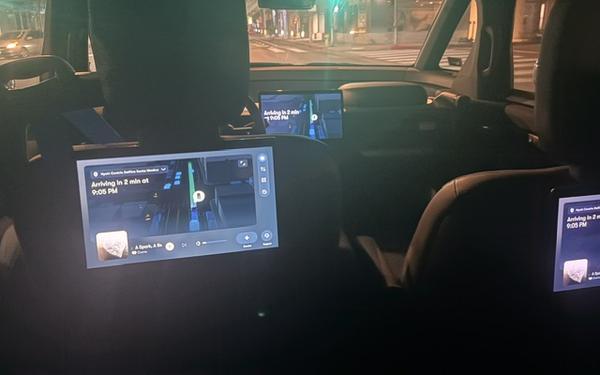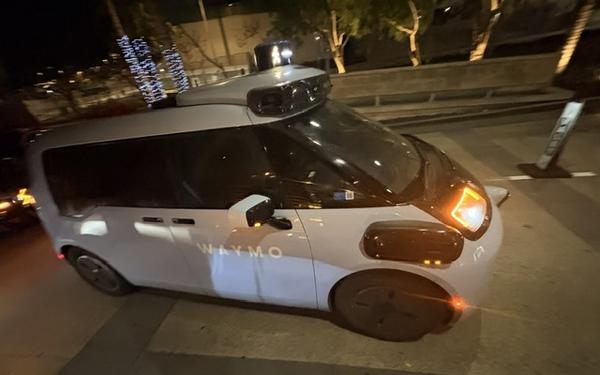
I’ve ridden in several Waymo
self-driving robotaxis over the past several years and look forward to riding in more once the service is available in Detroit.
But this weekend I had my first ride in a Waymo
Ojai, formerly called the Zeekr RT — a purpose-built electric robotaxi built by Chinese-owned Geely.
While the Jaguar I-Pace Waymos are lovely, the Ojai has way more
room inside and would be awesome for riders with mobility issues. A low step-in height and wide sliding doors make entering and exiting easier. It features completely flat floors as well as
seat-integrated grab handles for extra physical support.
I was out in Santa Monica this weekend for a women’s journalism conference. When I finally escaped the air-conditioned
hotel ballroom, I headed out with friends to dinner.
advertisement
advertisement
Afterward, two of my friends insisted they needed exercise and opted to hoof it back to the hotel in the obnoxious
90-degree heat. A fellow technophile (as opposed to technophobe) and I ordered a Waymo.
We had one false start. We couldn’t figure out where the app was directing us to find
the vehicle. By the time we realized it was inside a parking lot, we watched the vehicle slowly pull away. I was charged a $2.49 fee “for the car’s time.”
Lyfts
and Ubers were really busy and I had three 50% off coupons to burn, so we decided to try again with the Waymo, and this time we knew where to go for pickup.
It was $6 for the
one-mile ride -- and no tip needed, because there's no human driver!
While waiting for the second Waymo to arrive, we watched another Waymo (Santa Monica is crawling with
them) come to a full stop at a pedestrian crosswalk which had blinking red lights. An impatient (human) driver almost illegally passed it. And that's how many Waymo-involved accidents
happen.
Waymo autonomous vehicles are generally safer than human drivers based on recent independent and company data, according to the Insurance Institute for Highway
Safety.
Per vehicle mile traveled (VMT), Waymo’s driverless vehicles deployed in San Francisco, Phoenix, Los Angeles and Austin were involved in 68% fewer crashes than human
drivers, researchers found. The sample was restricted to crashes that a person would typically report to the police.
The global robotaxi fleet is expected to exceed 1.5 million
vehicles in 2036, according to Berg Insight, which states the emerging robotaxi market is one of the most dynamic segments of the automotive industry today.
California is a test
site for robotaxi technology, says Matthew Raifman, who studies autonomous vehicles at University of California at Berkeley's Safe Transportation Research and Education Center and compiled a dashboard
of robotaxi accidents using government data.
"As a testing bed place in California, we are taking on a lot of that trial and error," Raifman tells the Los Angeles Times. "I wish it wasn't a robotaxi race,
even though it is. I hope it's a slow stroll towards safe mobility.”
Tesla announced over the weekend that it is expanding robotaxi operating hours in Austin to 11 p.m. from
10 p.m. When asked why it couldn't go later, Elon Musk said the company was working on protecting pets.
"The main thing we’re trying to solve is making sure that we
don’t run over pets when they’re hard to see at night," Musk wrote on X. "Literally trying to avoid grey kittens on
grey tarmac in the dark."