It’s been nearly a year since I started championing
that in an increasingly AI-generated synthetic world, the next big ad industry KPI will be authenticity. And I’m happy to see the
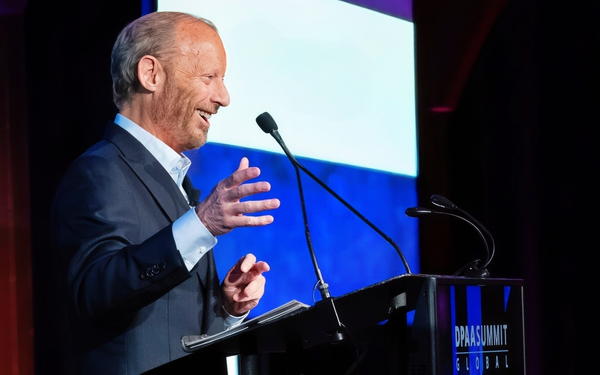
concept is gaining traction. In fact, when I spoke with DPAA President-CEO Barry Frey ahead of its big annual summit in New York City this week, he said that was one of the big themes of this
year’s event.
Actually, first he nudged me once again about why MediaPost keeps paranthetically referring to it as the Digital Place-Based Advertising Association, and when I
explained it was our editorial style to spell out company acronyms on first reference, he rebutted, “Would you spell out AT&T as American Telephone & Telegraph?” Touche. So let me
begin by asking you readers if the DPAA has sufficiently branded itself as an acronym that MediaPost can discontinue the spell-out? Feel free to answer with a comment below or email joe@mediapost.com. The power is in your hands.
advertisement
advertisement
Back to the DPAA – as well as its summit’s “Video Everywhere” branding
– I asked Frey to being by explaining this year’s positioning and how it is different from its past.
Barry Frey: We’ve evolved. We’re not
[the Digital Place-Based Advertising Association] anymore. We are now the digital out-of-home trade association or we’re the trade marketing group that promotes innovation, digitization and
growth of the medium.
The reason for the name ‘Video Everywhere” is because video is the most powerful medium for consumers and brands and video is outside the home,
prolifically.
Our theme is “real connections” and what that refers to is that we make real connections and the power of real connections in real life is huge today,
especially when 50% of the content on the web is created by bots. People don’t know what’s real. What not real.
What we do know is that when you’re in the street or
in a physical place and there’s a one-to-many medium there in public, you have to tell the truth or you’d have people throwing tomatoes at it.
When you’re a young
kid in a basement watching videogames or something else, he could serve up anything in an echo chamber. It happens. In other one-to-one scenarios there’s a lot going on, but when you’re in
public in a one-to-many medium, you’ve got to do the right thing. You’ve got to tell the truth. And that’s the power of real connections in the real world.
It’s all about the power – in this day and age when we’re not sure with AI what’s real, what’s fake news, what’s real news – we know that real
connections are made with people with brands with advertisers in the real world.
P&BI: “But your members also are advancing new forms of digital technology
– virtual reality, augmented reality, mixed reality – and I assume they’re all at least thinking about using agentic media buying and planning systems. How do you reconcile a shift
to an agentic world while you’re selling people on the real world?
Frey: Well, DPAA helped steward the adoption of programmatic in the out-of-home world. And
in the beginning people would say, “Barry, it’s a race to the bottom. We can’t control our inventory.” And my own experience coming from digtial, coming from TV and building
media businesses and seeing the propensity of programmatic in digital, I said we have to go there. So the same thing is going to happen with agentic. We’re going to do it smart. We’re
going to lead the way.
We’ve never been about the analog looking back. There’s a great quote that Martin Sorrell has, which is, “I prefer to work with people that
are looking at the sky than staring at their boots. And that’s what DPAA is about.
P&BI: Is there anything else that defines how what the DPAA is doing
differently this year than what you’ve done in the past?
Frey: Well, the fact that we’re doubling down on authenticity.
But also that
everybody is always clamoring for perfect measurement. Everybody always wants everything to fit into neatly into little boxes. The reality is that perfect measurement doesn’t exist. Think about
the company that takes the most amount of independent media money for research in the world, Nielsen. When Nielsen delivers those numbers, what does it call them?
P&BI: Estimates?
Frey: Right. It’s all estimates. None of this is census, true fact data. What we do is measure outcomes. And at
the end-of-the-day, what does a brand want? Do they want to accumulate rating points? Do they want to accumulate impressions? Or do they want to know that their brand lift moved to the top of the
funnel or that their products sold at the bottom of the funnel? And that’s what out-of-home is proving today. We are proving outcomes. The medium delivers.