It has been years s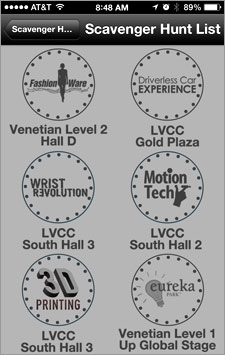 ince I attended the annual CES conference in Las Vegas, but every year around this time I thank my stars that I dodged that bullet for another year. I decided long ago that the mob scene
that is this unwieldy monster of a show is best experienced in the warmth and comfort of my desk in Delaware, via all the poor saps who are reporting exhaustively on it through all the usual channels.
CES is not only the most crowded place on earth -- half the tech you see there may never make it to market anyway. The half that does make it to market will be best experienced when it finally does
arrive in consumer-friendly form -- usually nine months after it gets teased at CES. Finally, it is Vegas in January. There may be colder places on earth than Vegas in January. But nothing feels quite
as cold as Vegas in January.
ince I attended the annual CES conference in Las Vegas, but every year around this time I thank my stars that I dodged that bullet for another year. I decided long ago that the mob scene
that is this unwieldy monster of a show is best experienced in the warmth and comfort of my desk in Delaware, via all the poor saps who are reporting exhaustively on it through all the usual channels.
CES is not only the most crowded place on earth -- half the tech you see there may never make it to market anyway. The half that does make it to market will be best experienced when it finally does
arrive in consumer-friendly form -- usually nine months after it gets teased at CES. Finally, it is Vegas in January. There may be colder places on earth than Vegas in January. But nothing feels quite
as cold as Vegas in January.
advertisement
advertisement
The one thing live visitors to CES do experience this year, however, is a large-scale testing of the Apple iBeacon technology. The Consumer Electronics Association
announced yesterday that via its iOS and Android apps for the show, visitors will be able to play a scavenger hunt game with iBeacons planted around the event. Users will collect badges by exploring
nooks and crannies at the venue. The first three players who collect all of the badges will get a prize of some sort. From my glance at the official CES International app where the scavenger hunt
resides, it looks like a meager test of about a dozen locations/vendors. Okay, well it is something.
The iBeacons are being provided by Radius Networks using the implementation of the
Apple technology by Texas Instruments. Apple Stores are right now the most prevalent use of the Bluetooth LTE iBeacons, but various stores are beginning to play with the idea. Proximity awareness will
be an extremely hot category at retail in the coming months. A number of companies are set to make announcements about large and small-scale tests. Grocery stores, which actually have been pretty slow
to adopt mobile technology, will be among the first and most aggressive categories in the space. Ticketing and aisle-aware promotions in-store as well as things like museum tours will see the
technology, I am sure.
The big open question in proximity-aware systems is how much consumers really want their mobile phones to be part of the in-store experience. As appealing as the
platform may be to retailers, there is a real risk of the technology feeling to consumers like a cumbersome tether rather than an empowering tool. There is a fine line between having access to all the
available and relevant offers in a venue and feeling as if a virtual salesperson is following and pestering you. Moreover, the shopping experience is a subtle and coveted one for many people.
There are good reasons why shopping has become a leisure-time sport of sorts in America. Mobile technology could very well enhance or intrude on a cultural ritual. As has been true at every stage in
digital media evolution and mobile proliferation especially, there are unexpected consequences attached to every move forward.