The “Dry January” challenge to abstain
from alcohol for the month has become widespread enough since its 2013 launch to become a part of modern culture. According to Alcohol Change UK, the organization behind “Dry January,” 8
million people attempted to refrain from drinking during January 2025, and an additional 8.8 million reduced their drinking during the month, as noted in a survey of 2,000 representative UK adults by
Censuswide.
The 2026 iteration of the campaign puts a new spin on “Dry January” by focusing not on what participants will be giving up, but what they’ll gain in the process:
a sense of achievement, and self-improvement across areas health, fitness, happiness, and financial savings. Created in collaboration with creative agency Shape History, the campaign builds on last
year’s “Boss It” platform and drives viewers to download a free “Try Dry” app.
advertisement
advertisement
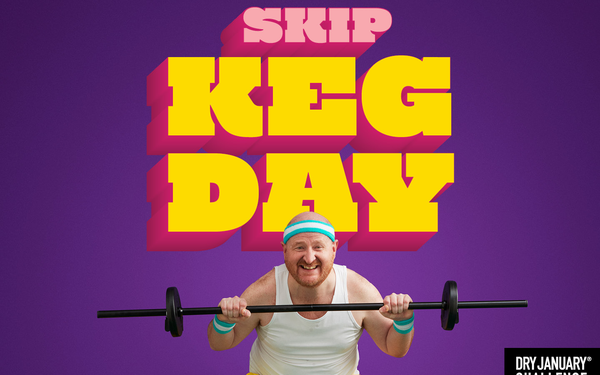
Creative features visual depictions of motivations for engaging in “Dry
January,” with playful lines like “Dry and Mighty,” “Skip Keg Day,” and “Under the Affluence” tied to different app features. The campaign launched last month
and will run across digital and social channels through January.
“In a world where alcohol is everywhere we look, and efforts to get us all to drink more are inescapable, the ‘Dry
January’challenge is all about enabling people to get back in the driving seat of their relationship with alcohol and start their year on a healthier, happier footing,” Alcohol
Change UK Executive Director of Communications and Marketing Joe Marley said in a statement.
According to Marley, the group’s analysis shows users of its “Try Dry” app are
“twice as likely to achieve a completely alcohol-free month — with 70% still drinking less six months later.”
Alcohol Change UK positioned the app, and this year’s
campaign, as relying on data and “evidence-based tools” for motivating behavioral change.
“The ‘Dry January’ challenge has always been about empowerment
and equipping individuals with the tools and resources to reset their relationship with alcohol,” Ed Fletcher, co-managing director at Shape History, said in a statement . “So this year
we’re dialing up on joyful, shareable and human content, grounded in behavioral science and designed to connect with every reason people take part.”