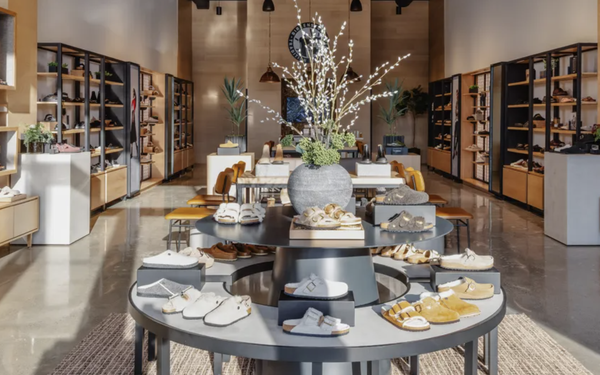
Americans may be cutting back on some apparel purchases, but there is plenty of room in their closets for Birkenstocks. The German footwear brand reported a 15% jump in fiscal fourth-quarter sales
to €526 million (about $617 million), topping expectations and reinforcing the strength of a strategy built around disciplined supply, limited discounting and physical retail as a marketing
engine.
Sales grew double digits across every region, up 11% in the Americas, 16% in Europe and the Middle East, and 33% in Asia-Pacific. For the
full year, Birkenstock sold more than 38 million pairs, a 12% increase. Net profit surged 79% to €94 million (roughly $110 million).
A key
signal of the brand’s pricing power? About 90% of sales came from full-price products, even as many of its competitors rely on a steady diet of discounts and promotions. “We remain
committed to maintaining relative scarcity,” CEO Oliver Reichert said on the earnings call, calling full-price sell-through “the ultimate indicator for brand health.” Back-to-school
sales rose 20% across the company’s 10 largest retail partners, suggesting the brand’s appeal remains strong with younger shoppers even as trends churn.
advertisement
advertisement
Stores continue to play a central role in that strategy. Birkenstock recently opened its 15th company-owned U.S. store, in Chestnut Hill, Massachusetts, bringing its
global total close to 100. Wholesale sales climbed 22% during the quarter, while direct-to-consumer revenue rose 8%. The company plans to open about 40 additional locations in 2026, positioning
physical retail as both a sales driver and a way to introduce new customers to the 250-year-old brand.
The iconic Boston clog, now in its 50th
year, remains Birkenstock’s top seller, but the company said 10 of its top 20 silhouettes are now approaching similar scale, signaling broader style adoption beyond a single hero
product.
Executives cautioned that while price increases helped offset tariff impacts this year, that cushion will shrink in 2026. The company
expects profit margins to come under pressure and forecast sales growth of 13% to 15% next year, a slower pace than in the current fiscal year — a reminder that even brands “winning
ugly” are not immune to a tougher cost environment.