;
After scouring scores of product announcements from this
week’s huge CES Show in Las Vegas, we’ve come up with one apparent trend in the health space: Fueled by AI advancements, here come the robots to help make us healthier, functioning
mostly as well-trained private-duty nurses or companions who ease stress and loneliness.
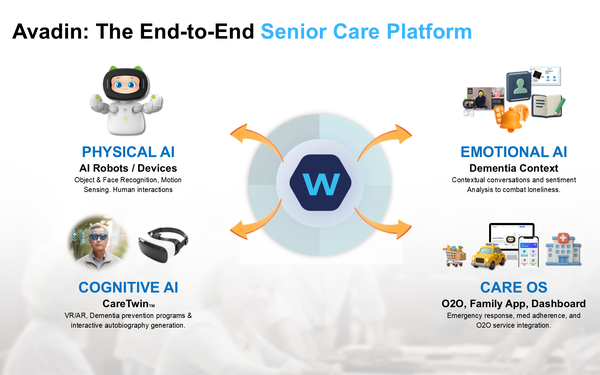
At CES, Wonderful Platform is showing off Avadin, which it’s touting as “the world’s
first physical AI Care Operating System” for senior and dementia care.
Targeted to major insurers, long-term care organizations, the U.S. Department of Veteran’s Affairs, and state
agencies, Avadin boasts its robots are the physical AI part of a product that also includes cognitive AI (which models each senior’s memory, behavioral patterns, emotional states and
safety risks) and emotional AI (“contextual conversations and sentiment analysis to combat loneliness”).
advertisement
advertisement
“Robotics hardware has become cost-efficient enough for large-scale
deployment,” the company says in a press release, noting that more than 21,000 Avadin units have already been deployed in Korea, and that pilot programs in New York have shown “measurable
reduction in loneliness, higher adherence to daily routines, improved emergency response accuracy, and greater engagement from family members.”
Zeroth Robotics, meanwhile, launched M1, a
15-inch tall “home humanoid” whose functions include supporting “independent living for older adults with gentle reminders, daily assistance, and light safety awareness.”
Priced at $2899, it’s available now for pre-order, with shipping expected to start in April.
Another product being demonstrated at CES but already available in Korea is WIRobotics’
WIM S, a wearable walking assistance robot.
Designed for “seniors, people with limited mobility and workers who require endurance or musculoskeletal support,” the wearable
functions in four modes: “Air,” focusing on natural movement; “Hiking,” for uphill and downhill walking”; “Care,” for rehabilitation or daily support
functions; and “Aqua,” described as “a strength-focused exercise mode that simulates the resistance of walking in water.”
Mind With Heart Robotics has An'An, a
robot made of premium Australian wool and sheepskin that looks like a panda cub and is designed to for loneliness and elderly care. For those with cognitive decline, An'An “proactively engages
during inactivity, offers reminders, and supports caregiver oversight.”
Mind With Heart is also zeroing in on pediatric therapy with its Duncan Series Companion Robots, said to
demonstrate applicability in 24 out of 74 objectives for autism spectrum disorder across eight domains – including social and interpersonal interactions and relationships, daily living
functioning, and communication skills.
Indeed, robots are far from being just for seniors or physical support, with other products at CES designed to be companions for an increasingly
stressed-out population.
Launching a new “cyber-pet,” OlloBot cites a “rising demand among younger audiences for products that balance pragmatism with emotional value,
particularly as Gen Z increasingly embraces plush toys and AI companions as sources of comfort and self-care in daily life.”
Just imagine a cat or dog that not only provides
companionship, perhaps, but also “offers timely reminders, anticipates needs based on contextual cues, and stays aware of the surrounding environment, such as alerting its owner to bring an
umbrella before heading out on a rainy day.”
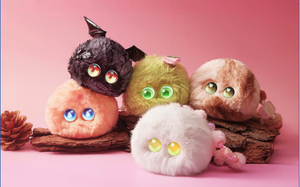
Meanwhile, Fuzozo, per Mashable, looks “remarkably similar” to the iconic Tribbles of “Star Trek.” They even purr like Tribbles.
“Imagine a fluffy little
alien from a galaxy far, far away, with big sparkly eyes and the squishiest body ever,” reads a Robopoet social media post.
“It’s called Fuzozo and it’s basically your new BFF. It listens to your rants, remembers your quirks, binge-watches shows with you, and even helps you socialize.”
But
we’ll end with Sweekar, from a Chinese company called Takway AI, described as “the world's first emotionally intelligent, physically growing AI pet” which “moves beyond
traditional digital pets to deliver a touchable, evolving AI lifeform.”
Per the Takway press release, Sweekar is "designed to feel like an independent lifeform, [and] continues its own
activities, such as exploring, learning, or developing new behaviors, while users are away, and later shares those experiences upon their return.”
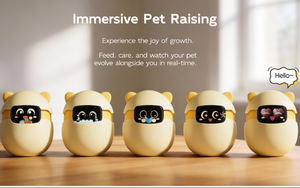
Signage at Takway’s CES booth says you can also feed your “pocket pet,”
although we can only imagine how (not to mention how the food then leaves Sweekar – this is generations removed from the Betsy
Wetsy of years ago).
Finally, your Sweekar can also become (lifelong?) “friends” with your neighbors’ Sweekar units. You wouldn’t want the critter to get
lonely while you’re away, would you? You must be concerned about its emotional health!