Commentary

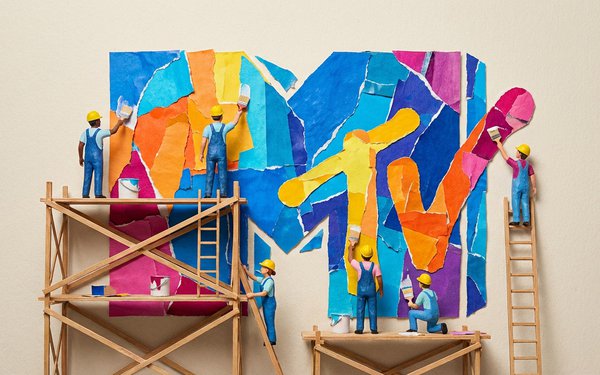
Can MTV Make A Comeback... With 'Digitally Curated' Music?

For decades, MTV has been simultaneous with music. In recent years, not so much. So why not bring it back to music -- in this ever-strong digital and niche content age?

But for the last decade and a half or so, the network has been encumbered with unscripted hip-video focused young-skewing TV shows, like its most recent “Ridiculous” prime-time series that aired virtually every night. The show ended last year.

Music had been banished to niched channels -- especially in Europe -- MTV Music, MTV 80s, MTV 90s and Club MTV. This all stopped recently. The original MTV flagship remains where all the unscripted content aired.

Now, apparently, CEO of Paramount Skydance David Ellison wants to possibly bring it back through a partnership, according to a report in Bloomberg News.

At around the same time -- just after Skydance Media's purchase of Paramount Global, Ellison and his senior executives met with the former MTV executives including Tom Freston.

advertisement

advertisement

Freston offered an idea on how to revive the tunes at the big channel: Digital curation.

A rough definition of this comes from music as “selected, organized, and presented using digital tools — often algorithms, data, and/or human editors—rather than by the listener choosing every track manually”, according to artificial intelligence (AI)-focused sources.

Going deeper, it would seem to focus on compiling all sorts of digital music platforms.

What about presenting the music contextually -- in terms of "focus," "workout," "dinner" and "sleep" specific areas? Perhaps we can think of MTV as an AI-helped digital streamer curating and personalizing music.

In any event, what about engagement? Marketing and promotion seem to be a key need. Surely, a strong social-media presence would be its foundation.

One might offer celebrity-related efforts around still popular TV shows such as its "Video Music Awards." Currently, while that show does appear on MTV, it got the bulk of its recent viewership from its first ever broadcast on a broadcast network -- CBS. It also aired on Paramount+.

Freston cites Paramount still houses a massive video film library that goes back to its start in 1981. It also has a library of "Unplugged" episodes where famous artists appear in low key settings, with mostly acoustic-based instruments.

Perhaps the new MTV could take a cue from this and evolve its music content like NPR "Tiny Desk Concerts."

Know this: Of the cable TV brands that Paramount is counting on, its main efforts will be around MTV — and potential young audiences.

Freston — the network’s longtime marketing chief before taking more senior executive roles at Viacom — was most concerned about the brand name (now MTV) and whether it could return prominence, with the right reference point.

From 1981 to 2010, it was called: MTV: Music Television.

2 comments about "Can MTV Make A Comeback... With 'Digitally Curated' Music?".
Check to receive email when comments are posted.
  1. Dan C. from MS Entertainment, January 13, 2026 at 4:29 p.m.

    I wonder if Freston spent an hour with YouTube Music, Spotify, or Pandora.


    What about presenting the music contextually -- in terms of "focus," "workout," "dinner" and "sleep" specific areas? Perhaps we can think of MTV as an AI-helped digital streamer curating and personalizing music.


    These already exist on those platforms, and I'm a big fan of YT Music recommendations based on context or genre or activity.  Celebrity playlists and community playlists have existed on these platforms for...ever!


    Seems like MTV is still a victim of it's past mistakes and woefully behind in its approach.


  2. Nina NYC from Consultant, January 13, 2026 at 5:52 p.m.

    Yes but "if you build it, will they come*"? 

    As someone who lived and breathed MTV as a viewer and superfan, later with the fortune to work there, this article and others neglect to explain why MTV stopped airing so many videos in the first place. The answer: advertising dollars. 

    At a time when Nielsen was measuring TV in 15-minute increments and music videos lasted 3-5 minutes each, viewers were simply not sticky with MTV's video rotating format. I myself changed the channel if a video I did not like (too pop! too mainstream!) suddenly came on. A fickle teen/young adult audience would abandon the channel and fail to contribute to consistent viewership patterns. 

    Cable networks had affiliate carriage fees and had to support themselves and their programming with advertising dollars. At the start, MTV wasn't cutting it, ratings were low. Thus began the "120 Minutes" music block, "Yo! MTV Raps" block, and so on. Viewership increased as like minded fans stuck around to watch videos of their chosen genres. Then came the :Remote Control" game show, followed by "The Real World," and a whole host of other longer-format, eyeball sticking content. This drove ratings and ad dollars, as did the various awards programs and sporting competition shows. Over time, the longer programming format worked for MTV in driving revenue, so the network ended up only airing the music video blocks during the already low-rated overnight television viewership daypart. 

    It's wild to think You Tube, TikTok and other short form content vehicles are the norm these days and that MTV may strive to return to that format. Cable providers and YouTube have had designated music genre channels for some years now. How this will manifest on MTV remains to be seen, and one has to wonder *what will happen to the advertising dollars. Can the network sustain itself? 

Next story loading loading..