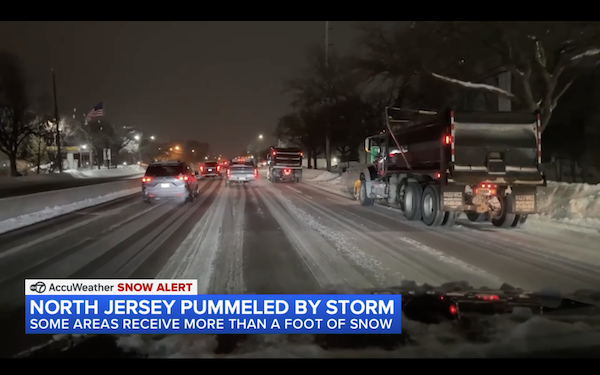
The just-concluded winter storm had
local TV news in a frenzy of warnings and weather maps in roughly two-thirds of the United States.
This storm was especially fierce. Here in the Northeast (and
presumably elsewhere), the onslaught included hours of driving snow and sleet in temperatures cold enough for the precipitation to stick to all types of ground and accumulate far too quickly for
snow-removal efforts to keep up with it.
This made roadways especially dangerous. News anchors and their
correspondents reporting from outdoor locations in the wind and snow continually warned local residents to stay home unless traveling by car was necessary.
These warnings were appropriate, but sometimes I wonder why something so obvious as not driving when streets are sheets of ice has to be warned against again and again. Not driving at such
times seems like common sense.
advertisement
advertisement
In the days leading up to the arrival of the storm (here in the Northeast, it was Sunday morning), the coverage seemed more
like hype than help, as if certain death awaited anyone who did not stock up on groceries or sidewalk salt before Sunday.
It should be noted at this point in
this TV Blog that during Sunday’s storm, five people in New York City were found dead outdoors. Later, the news reported a sixth death.
Few details were available, however, about the identities of these people and the circumstances, including
homelessness, that may have led them to be outside.
In all the storm coverage on Sunday, this story took a
backseat, but from a news standpoint, it should have been higher on the local-media story lists.
Once upon a time, it was standard procedure for a TV blogger
to decry the non-stop, high-decibel coverage unleashed on local TV news before and during major storms as just straight-up fear-mongering.
But sometimes when
a TV blogger gets older, he gains perspective and even wisdom (although the latter is exceedingly rare).
For me, especially after experiencing the voracity
of this storm on Sunday, the wide-ranging coverage made sense since our region around New York City is vast, with a multitude of communities, climates, weather patterns, elevations and infrastructure.
Local TV media here tries its best to fan out and serve them all.
But here’s the thing: On ordinary days, our local TV newscasts here (and probably
elsewhere) hype all weather.
For years now, local stations have routinely led their newscasts with a weather
report that serves as a tease for a more in-depth weather segment later in the show.
In these routine reports that open the news, the threat of rain is
treated like an approaching hurricane. And snow? Forget it.
TV news makes it seem like an inch of snow will cripple three states.
This is the context
in which it is sometimes reasonable to ask about local-TV weather coverage in a major storm event: Is this storm real, or are the local-station weather people just crying wolf?