“The rest of the media does a lot of the
work getting the patient into the doctor’s office. Point of care closes the deal.” -- Kate Duffy, Pfizer’s product lead for commercial AI acceleration – omnichannel
orchestration.
Yet these days, point of care (POC) pharma marketing encompasses much more than just doctors’ offices.
Duffy is quoted in “The Continuing Evolution of
the Point of Care Channel,” a just-released survey of execs from pharma brands and agencies conducted in 3Q 2025 by POC platform PatientPoint and pharma info platform Solli.
They
foundthat 71% of current POC users are paying for telehealth ads and messaging, 53% for patient text and email conversations, and 35% for pharmacy-based media. Then there’s brand
messages on exam room tablets and screens, used by 65%, with 59% for each of the following: waiting room screens, printed brochures and posters, and digital patient portals.
advertisement
advertisement
In the
report, 94% of POC users lauded the channel for reaching patients during key decision moments, and 72% for aligning with their communications strategies geared to healthcare professionals.
Claire Knapp, CEO of Havas Lynx, pointed to high levels of trust and influence for POC, “particularly pertinent to a world where HCPs have never trusted pharma less, and patients are being
increasingly impacted by misinformation and disinformation.”
The ability to reach both patients and healthcare providers (HCPs) “right at conversion” is a key advantage
of POC, Sun Pharma’s senior director of marketing Stephanie Loiseau pointed out during a recent webinar from PatientPoint and Solli.
Elissa Guerra, PatientPoint executive vice president,
noted that POC provides pharma marketers with “a very safe place for their message, and you have an expert—a healthcare professional – right there to address questions.”
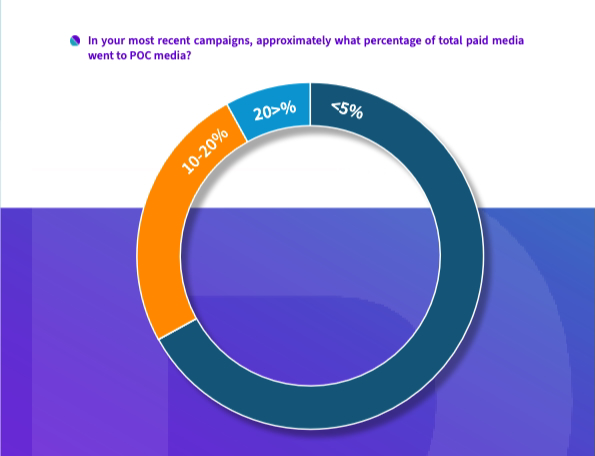
With such strengths then, why did the study find the median allocation for POC to be just 5% of total pharma ad budgets?
Partly because such channels as paid search and programmatic display are easier to
measure, Christine Mormile, CMI Media Group’s vice president, engagement strategy, told the webinar. “It’s also looked at as expensive.”
Unlike some other channels,
“it takes a few months to show lift” while “marketers want to be able to show impact right away,” Loiseau added.
Guerra stressed that POC is “highly
measurable,” but that it takes “at least six months” to generate data on prescriptions written, and another month or two to do the analysis.”
“Point of care
isn’t as instant as clicking through to a website,” explained Mormile, but she said it pays off in long-term ROI.
And that ROI, she said, could double or triple by targeting
consumers and HCPs simultaneously versus running siloed campaigns.
“It doesn’t have to be the same exact message, just aligned and coordinated,” noted Loiseau.
Simplicity is also important, she said. “We’re not looking to do mental gymnastics when a patient is in an office or when an HCP is having these conversations.”
“There’s a medical expert in the room,” Guerra chimed in, “very different from what you’re doing when somebody’s in a living room or at a sporting event.”
At the doctor’s office, she said, “the smallest tweak of a word” could be all-important. “What are the one, two, three things you want that patient to know, right before they
go into the doctor’s office?”
Guerra pointed out that, even with the rise of new POC vehicles, 82% of patients are still in the doctor’s office. But
“they’re also utilizing telehealth, they’re going to the pharmacy, they’re going to a patient portal.”
With the need for connectivity between all those
touchpoints, POC marketing should no longer be considered a “pilot program,” Loiseau declared. “It’s essential in bringing that full omnichannel approach and ensuring
that the patients and HCPs are getting the message.”
Mormile also stressed the need for empathy in content messaging, both for patients and HCPs. The latter, she noted, “are
overworked and there’s a shortage, and they’ re already burned out….Empathy in your message and connecting to the doctors and the patients at the right place and right moment is
critical.”