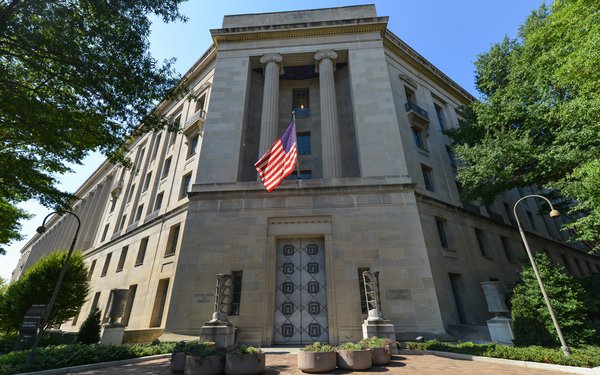
The Department of Justice (DOJ) and 38 states on
Tuesday appealed a judge's order sanctioning Google over antitrust violations, a decision that
followed a Washington judge's earlier finding that Google ran an illegal monopoly in the search market.
The order, issued in September by U.S. District Court Judge Amit Mehta in Washington,
D.C., imposes some restrictions on Google, but allows the company to continue owning the Chrome browser and Android operating system, and allows Google to continue paying Apple and other companies to
distribute Google Search.
Mehta entered the order after ruling in August 2024 that Google violated antitrust law by maintaining a monopoly in two markets: general search services and search
text ads.
Other provisions in the order prohibit Google from entering into any exclusive distribution contracts for Google Search, Chrome, Google Assistant and the Gemini app for six
years.
advertisement
advertisement
The order also requires Google to share some data about users' searches with "qualified" competitors and provide syndicated search results and ads to those competitors.
Google
recently appealed the order, and is currently seeking to stay the provisions requiring data sharing and syndication.
Many industry executives representing companies that participated in the
trial's hearings believe U.S. District Judge Amit Mehta’s ruling setting remedies for Google was a loss for the DOJ and the states. They had asked for tougher consequences.
Yelp on Tuesday said it supports the U.S. DOJ and states decision, but believed Mehta's ruling only placed modest restrictions on Google's search engine and AI contracts.
“Yelp
applauds the plaintiffs for having appealed the remedy decision in the Google search monopolization case,” Yelp Vice President of Public Policy David Segal wrote in an email to MediaPost.
“This broad, bipartisan coalition of plaintiffs — whose work has spanned the Trump and Biden administrations — has done an admirable job of pursuing this case and securing a
determination that Google illegally monopolized general online search.”
The problem, Segal wrote, is that the measures in the court’s remedy decision are unlikely to
restore competition -- mainly because the remedy allows for Google to continue to pay third parties for default placement in browsers and devices. That was the primary way Google “unlawfully
foreclosed competition to begin with,” he wrote.