They say nature abhors a vacuum. I believe the
same is true of democracies, so I hope you won't mind if I try to fill the one created by the vacuum of credible, responsible journalism making America's democracy increasingly dark.
It's not
one thing causing it, of course, but a perfect storm of print-to-digital media industry economics, combined with the rise of social media, and more recently AI-generated or altered news and
information.
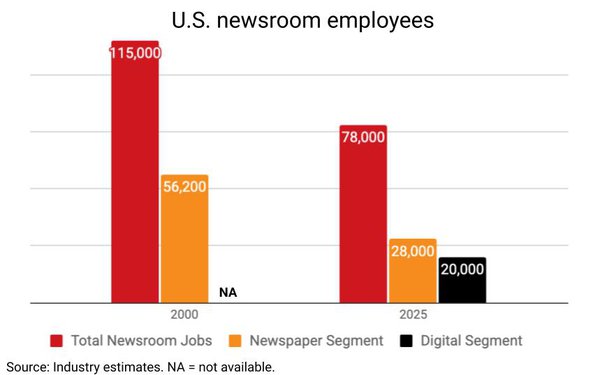
Over the past quarter century the number of newsroom employees in the U.S. has fallen by 32%, even accounting for the expansion of digital news and otherwise unclassified news
organizations. Among newspaper newsrooms, the number of employees has fallen by half.
advertisement
advertisement
Midway through the digital disruption and erosion of U.S. journalism jobs, MediaPost
conducted a series of studies, as well as multiple years of annual high-level news organization and tech platform events with The Wharton School to explore new business models that might emerge to
sustain journalism and the project came up with about a dozen -- ranging from conventional advertising and subscription revenue-based ones to affiliate marketing ones (like The New York
Times' Wirecutter product recommendation/selling division), to a benefactor model.
And it looked like that last one might actually be feasible a dozen years ago when billionaire Jeff
Bezos purchased one of the jewels in the crown of American journalism, The Washington Post.
In retrospect, it's unclear whether he has had a change in heart about sustaining the type
of journalism that has kept American democracy from going dark, but whatever his motives and agenda are, the prospects for the future of Washington Post journalism aren't looking good
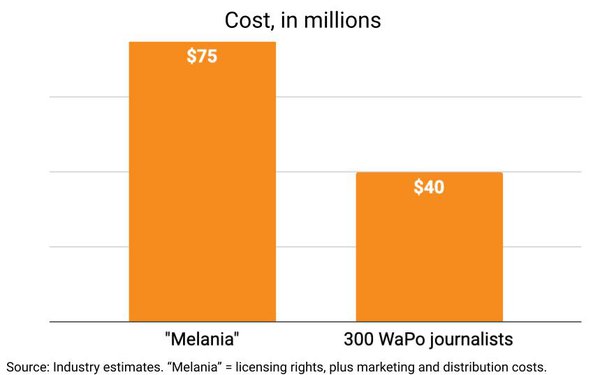
following news this week that he just cut 300 journalists -- about a third of its editorial staff.
The Washington Post payroll for those 300 journalists is estimated at about $40 million, or the same amount of money Bezos paid First Lady Melania Trump for rights to make her bio pic
"Melania."
Balance sheets aside, the comparison is at the very least a dark one given the way Bezos already has kowtowed to Trump, while simultaneously deprecating a vital news organization
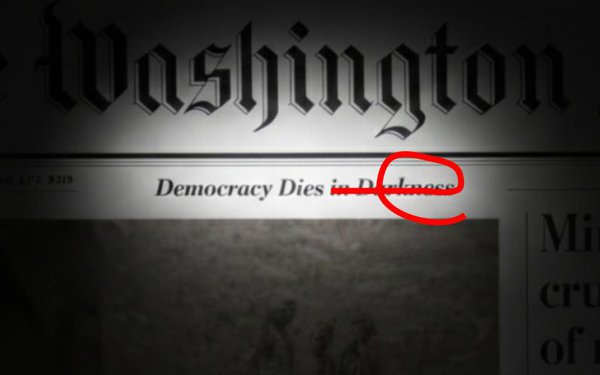
whose motto literally is "Democracy Dies In Darkness." So thanks to Bezos, it can probably be shortened now for brevity.
Back to the vacuum point behind today's post. During an earlier cutback, The Washington
Post got rid of the team that tracked the number of "false and misleading statements" -- you know, lies -- made by Donald Trump in his official capacity as POTUS during his first term. As you may
recall, the team tallied 30,573 by the end of his
first term.
And as far as I can tell, no news organization has picked-up on that level of fact-checking continuity, so I just did some back-of-the-LLM research querying how Trump's first
year of his second term might compare with the Washington Post's first term benchmark.
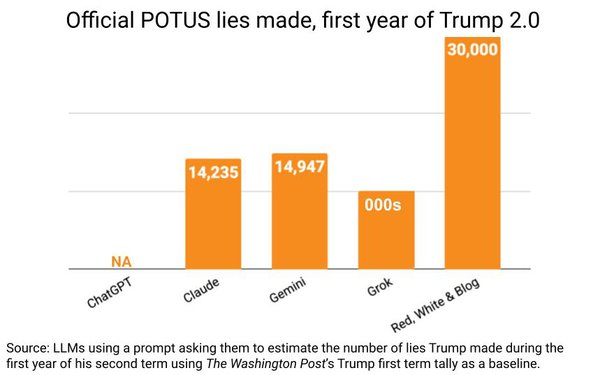
ChatGPT declined to participate.
Claude demurred, but pointed out that based on the Post's
analysis, Trump averaged 39 lies per day in the last year of his first term, and suggested that if I used that as a factor that would mean 14,235 lies in Year One of Trump 2.0.
Gemini
concurred with Claude's thinking about baselines, but that "given his increased frequency of 'unscripted' social media activity and lengthy rallies in 2025, the number should be factored upward by
about 5% for a total of 14,947.
Heck, let's round that up and just say he's lied about 15,000 in his official capacity as President during his first year as the 47th POTUS.
It's
anybody's guess, and based on my own methodology observing how he often lies multiple times within a statement -- sometimes contradicting himself midway through -- I would factor that up by at least a
2x multiple, or nearly as many as The Washington Post's estimate for all of Trump's first term as POTUS. Maybe more.
But it's not just the quants of Trump's -- as well as other senior members of his
administration's -- lies. It's the qualitative nature of them that should alarm us all. See Dan Perry's piece also published today to delve into that, but the reality is the lies
have gotten more brazen, more outlandish, and seem designed to gaslight us into disbelieving what we see with our own eyes.
Lastly, at a time when people in the advertising and media industry
are questioning the impact AI-generated content may or may not have on people's trust in published content overall, Trump's social media team has resorted to -- paraphrase advisor Steve Bannon --
literally dropping bullshit on the zone of American democracy.
I guess Barack Obama was right when he famously characterized Trump as "nothing but a bullshitter."