With telehealth providers Hims & Hers and
Ro reaching millions with their Super Bowl ads, we decided to check in with
LifeRx, a lesser-known competitor which has served 100,000 GLP-1 customers without much public fanfare since 2021.
LifeRx itself is now getting more visible with a widening marketing presence
and expansion into the hair loss and erectile dysfunction (ED) categories.
“This year is going to be the first that a lot of people are going to hear about LifeRx,” CMO Brandon
Ganske tells Pharma & Health Insider, “but it’s not the last.”
“There were so many GLP-1 providers out there and we really wanted to do it right, to make
sure we had all our ducks in a row on the back end,” Ganske explains about LifeRx’s five-year rollout, “so we took it in a controlled, slow way.”
advertisement
advertisement
LifeRx’s
increased marketing presence began last year with the addition of three brand ambassadors, all involved in social content, owned media, press outreach , consumer education, and paid digital
efforts.
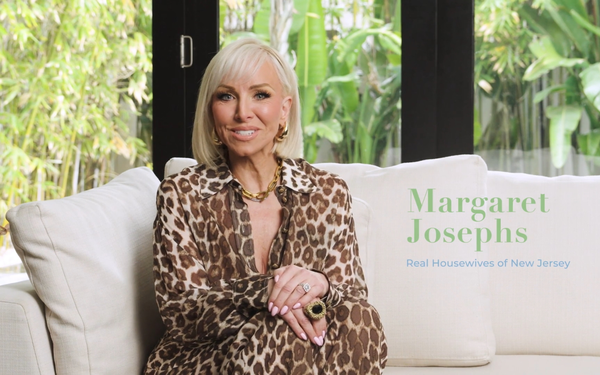
Two of the ambassadors came out of Bravo’s “Real Housewives” universe: Margaret Josephs from the “New Jersey” cast, and Emily Simpson from the
“Orange County” edition.
The decision to go that route resulted from a “deep dive into where our targeting was picking up the best CAC [customer acquisition cost] and where
our customers were really living,” Ganske says. That place, he says, are “areas which are predominantly heavy with Bravo viewership, and ‘Housewives’ is Bravo’s top
tier.”
Turned out as well that two of the most popular housewives -- Joesphs and Simpson -- could tell their own stories about using LifeRx’s GLP-1s. The former had already been
using the provider’s product for three years, while the latter has been documenting her new experience since coming on board.
Here are videos from Simpson and Josephs.
Ganske says the two reality stars have been successfully
reaching what has been LifeRX’s target demographic: 35- to 55-year-old women “living in Middle America.”
Also attuned to that demo is LifeRx’s third brand
ambassador: actor/host Mario Lopez.
Lopez is not a LifeRx user, but rather “comes from a voice of reason,” Ganske says, ”talking about our customer service, the great reviews
we have on Trustpilot and Google, and explaining to the masses that ‘LifeRx is a great company and this is what they offer.’
“Lopez’s fan base skews heavily toward
middle-aged women,” Ganske says. “They’ve all looked up to him since they were younger, and now they’re aging with him.”
The Lopez relationship includes
sponsorship of the celebrity’s weekly boxing podcast, “The 3 Knockdown Rule.”
In this clip from the show, Lopez
interviews Nic Sementas, LifeRx’s chief advocacy officer.
The boxing show should also help LifeRx extend its reach to men, Ganske says, which should be especially useful with the
company’s expansion into hair loss and ED products.
While the GLP-1s and hair loss products can appeal to both women and men, the ED category poses special challenges. While men, of
course, are the final ED users, women may well be influential in their decisions.
“As a man, who do you listen to?” he asks. “It’s probably your girlfriend or your
wife. So, if we can speak through women to their husbands or their male counterparts, that could be a very large win.”
For now, though, LifeRx is marketing its ED products through sports
targeting on Meta and TikTok, “where our men’s user base could be living.”
Ganske is especially keen on what he says sets LifeRx apart from other telehealth providers.
For one thing, rather than charging subscription “just to be part of the platform” LifeRX works like flesh-and-blood HCPs: You get a prescription and can refill it or not
each month.
Also, he notes, customers are required to visit with their LifeRx providers every 90 days. “We’re not just freely handing out [meds],” he says. LifeRx customers
“have to have that Zoom call or phone call with a provider, giving your blood work and actual medical data to them so they can evaluate if you truly are for the medication.”