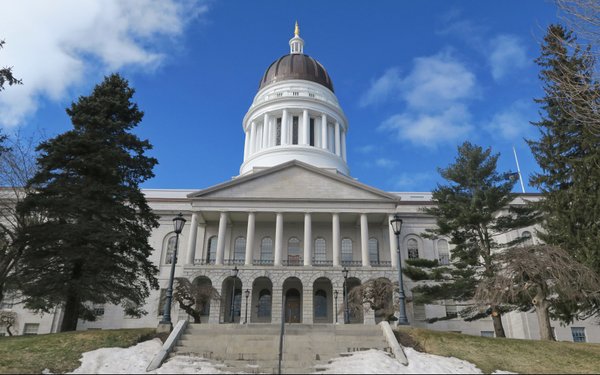
Maine's Senate on Thursday
passed a privacy bill that would impose sweeping restrictions on companies' ability to collect data and target ads, and would completely ban the sale of sensitive data, including precise location
information.
Ad industry groups oppose the bill (LD 1822), arguing to lawmakers that it's more
stringent than other state privacy laws.
"If enacted, LD 1822 would make the state’s approach to privacy an outlier in ways that would harm consumers and businesses of
all sizes," the Association of National Advertisers, American Association of Advertising Agencies, American Advertising Federation and Digital Advertising Alliance said in a letter sent to Maine
Senate members last month.
advertisement
advertisement
But consumer advocates champion the proposed law, arguing it will safeguard people's privacy better than state statutes that only require businesses
to obtain consumers' consent before selling sensitive data about them.
The bill "will protect consumers by default, instead of requiring them to make endless consent choices in
order to fully protect themselves," Matt Schwartz, policy analyst at Consumer Reports, stated.
In addition to banning the sale of sensitive data, the Maine bill would prohibit
companies from collecting such data unless the information is "strictly necessary" to provide a product or service requested by consumers.
The measure's definition of sensitive
data includes information that can determine geolocation within a 1,750-foot radius, biometric information, genetic data, and information revealing race, ethnicity, health status, sexual orientation
and citizenship status.
Another provision would require companies to allow adults to opt out of the use of their personal data -- meaning information that's linked or linkable
to devices or consumers -- for behaviorally targeted advertising. The bill would prohibit companies from harnessing minors' data for ad targeting.
Political organizations would
be exempt from the restrictions under the Senate version of the bill.
The ad organizations say they oppose the bill for numerous reasons, including that the restrictions on
data collection could "constrain targeted advertising, particularly with respect to prospecting for new customers."
"Prospecting typically involves collecting and analyzing
personal data to identify individuals who have not yet engaged with a business but who may be interested in its products or services," the organizations write, adding that the bill would only allow
businesses to collect a consumer's data if the information is needed to provide a product to service to that particular consumer.
"As a result, prospecting activities, such as
building audiences, enriching lead lists, or using personal data to identify potential new customers, could fall outside the permitted purposes for data collection," the groups write.
They also argue that the ban on selling sensitive data will hinder companies from "reaching individuals with relevant marketing."
"The provisions in LD 1822
could functionally prohibit religious organizations from reaching out to potential new parishioners and bespoke cultural product providers from reaching individuals of particular ethnicities with
messaging and advertising about their products," the ad groups contend.
The Maine measure now returns to the House of Representatives for a final vote. That body narrowly
passed a similar version of the bill last month, but the Senate iteration includes an amendment that would exempt political organizations from the restrictions.
The House could
vote as early as Tuesday.
Around 20 states have enacted comprehensive privacy bills, and two of those states -- Maryland and Oregon -- prohibit the sale of precise geolocation data. Virginia
recently passed a similar ban on the sale of location data, but that measure hasn't yet been signed into law.