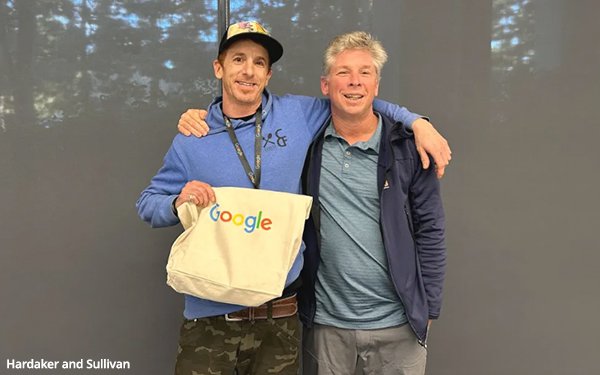
Serenity in the shadows of Wyoming's
Tetons seems like the perfect place sometimes -- unless you are a search engine optimization (SEO) expert or publisher at a media company trying to adapt to changes made by Google's algorithms as it
ventures into artificial intelligence (AI).
You may even accept Google's offer to help its developers better understand how AI affects companies like yours, along with brands and advertisers,
all across search. Rather than gain rewards, however, something goes terribly wrong and your content gets "ghosted," and web traffic gets cannibalized by AI.
That's how Mike Hardaker, CEO
of Mountain Weekly News, described the experience after attending the Web Creator Summit in October 2024.
Hardaker has been publishing content for 24 years, "vetting gear in the trenches of
the Tetons while Google was still in its infancy," he wrote on LinkedIn.
advertisement
advertisement
Honestly, I have lived outside Jackson Hole for eight years, and never heard of Mountain Weekly Media, or perhaps I
never paid much attention. Now I will. I reached out to Hardaker on LinkedIn for an update.
Google had invited Hardaker, and 19 other independent creators, to its headquarters to help
"fix" the search ecosystem as AI disrupted it. (I had heard that before from other creators.) The visit to Mountain View, California did not turn out to be as he had hoped.
Publishers who
attended the event learned about a new ranking update that would come very soon, and Google was interested in their feedback. They were told September 2023 traffic levels would not return because
search was changing as a result of AI.
"They told us they wanted to hear from the experts," Hardaker wrote on LinkedIn. "They told us search was changing and they needed our help to
get it right." But Hardaker called it a "masterclass in smoke and mirrors."
Hardaker -- as well as Rutledge Daugette, CEO of TechRaptor, a gaming website --who also attended, went public with
their grievances in LinkedIn posts and links to documents detailing what happened and describing how AI across search completely crushed their publishing businesses.
When Hardaker attempted to
reach out to Director of Google Search Danny Sullivan, he did not get a response, so he posted links to supporting documents that account the events.
“Mike, I repeatedly and patiently
tried to help you and respond to your questions and concerns both before the event and afterward, to the degree I or anyone from Google is allowed to provide support (as you know, we can't provide any
specialized insight),” Danny Sullivan reposted in a response on LinkedIn that he posted previously. “That included directing you to our guidance about site moves and migrations, when you
direct messaged the Search Liaison account that I used to run last March 2025.”
Sullivan had asked Hardaker and others to send proof in writing of events that led to the
“ghosting.”
Hardaker sent eight pages. Daugette and one of the nineteen
independent creators who also attended the meeting who had experienced issues being found online, sent 26 pages of data to Google.
“Google fundamentally doesn't
care about individual publishers or even its impact on the ecosystem, except insofar as a deleterious impact would degrade its search results and sources of AI training data,” Greg Sterling,
co-founder of Near Media, wrote in the comment section on LinkedIn, responding to Hardaker’s post.