
Houston’s University of Texas MD Anderson Cancer
Center, ranked for the past 11 years as the nation’s top cancer hospital by U.S. News & World Report, has teamed with the National Cancer Institute to create a traveling 5,000
square-foot museum exhibition called “The Journey to End Cancer: From Cause to Cure.”
A five-year tour kicked off a month ago at the John P. McGovern Museum of Health and Medical
Science, also in Houston. It will move on to the Mulva Cultural Center in De Pere, Wisconsin in October for a three-month run, with future venues still to be announced.
Co-branded merchandise
will be available at each host museum, with a portion of the proceeds supporting cancer research and treatment at MD Anderson.
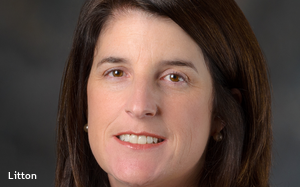
We asked Dr. Jennifer Litton, the hospital’s
chief clinical research officer, about this unusual educational initiative.
advertisement
advertisement
P&HI: There seems to be a lot of science involved in the exhibits, so how user-friendly are they?
Dr. Litton: It's incredibly visitor-friendly and accessible to anyone. This was our collective goal from day one — to present complex concepts through interactive, inclusive,
accessible storytelling features, visuals, games, and interactive design elements. Visitors can engage at different levels depending on their particular interests and backgrounds.
For example:
someone can play the microbiome-themed healthy food choice game, while another watches interview footage of cancer survivors in one of the exhibit's three-story pods.
Pharma &
Health Insider: What does MD Anderson hope to achieve with this?
Dr. Litton: We really hope to meet people in their communities to increase understanding of how cancer research
works, why it matters, and where we are in terms of detection and treatment innovation. We also want to raise awareness about proactive prevention measures.
We also hope visitors walk away
understanding that cancer research is an active, ongoing process with real outcomes and effects. As recent data confirms, in many cancer types we are curing more people and more people are living
longer as a direct result of clinical research and all the patients who participate in trials every day.
The exhibit highlights real people undergoing therapies, survivors, clinicians,
and healthcare workers to better understand the impact of cancer and a whole connected community dedicated to ending it.
P&HI: Who do you hope comes to see the exhibition?
Dr. Litton: Honestly? Everyone. We helped create the exhibit to be as inclusive and broadly visitor-friendly as possible on purpose. Everyone knows someone who has been affected by
cancer.
I hope patients, survivors and caregivers — anyone looking for context, understanding, even hope — visit and come away feeling informed and optimistic. I hope students and
young people possibly considering careers in medicine, oncology, nursing or science visit. We've already had local elementary-aged students visit on field trips. That in turn
gives me hope.
P&HI: Why was the exhibition undertaken at this time?Dr. Litton: Cancer science has reached a moment where
discovery is rapidly translating into real outcomes for patients. We now understand cancer at a molecular and genetic level in ways that were not possible even a decade ago, so we wanted to find an
accessible and inclusive way to share this information as broadly as possible.
Using a science exhibit as the vehicle is novel and serves as that accessible avenue to reach children, families,
those with a connection to cancer, and beyond. There is also a strong need to continue communicating both the history of cancer science as well as the incredible momentum and breakthroughs currently
happening in our field to ultimately expand the public's understanding of science, the vital importance of research, and evidence-based care.