The World Advertising Research Center is out with a new
consumer trends report that finds that AI is redefining “companionship.”
That’s one of five key consumer trends that the group says will influence consumer purchase
decisions over the next year.
The other trends covered in the report are:
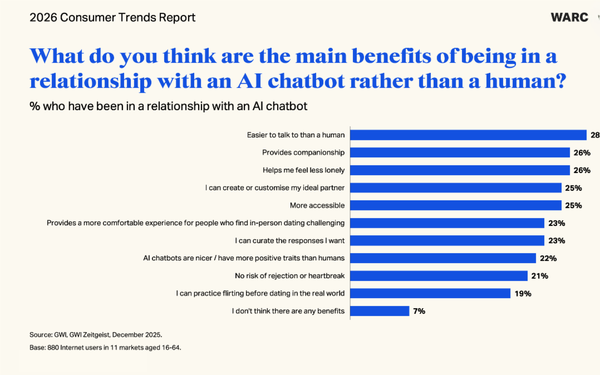
Ten percent
of consumers globally report having been in a relationship with an AI chatbot, according to the report. The majority of those consumers--62%--say they are likely to turn to an AI
chatbot rather than a human friend for personal advice.
AI companions appeal to users by reducing loneliness and removing the complexities of human interaction. And that appeal is driving
innovation. One example: AI-powered toys and companion devices designed to meet the emotional and safety needs of the elderly.
The report also found that consumers are becoming
more trusting of AI as their relationships deepen.
But the report cautions that marketers “must tread carefully when leveraging AI to engage with vulnerable
populations - particularly younger demographics - and address potential safety and mental health risks.”
Macroeconomic turbulence and resulting anxiety about employment is
fueling a trend toward “comfort consumption,” according to the report.
Nearly half (45%) of employed consumers are concerned about their job security. One third
(33%) are either saving more or cutting back on expenses due to job market conditions.
Consumers are reacting to uncertainty by directing spending toward
purchases “that bring them joy at minimal cost,” per the report, such as wellness and hobbies.
Many consumers would like to travel more, but ongoing
geopolitical conflict is putting a damper on such plans due to safety concerns and fuel price increases.
To tap into consumers’ desire for “accessible
joy,” marketers are recommended to explore ways to align brand offerings with these smaller comforts.
While concerns around the potential harms of social media for teens and
children (think cyber bullying and exposure to harmful content) aren’t new, concerns have escalated, triggering a wave of legislation and debate around social media bans
for minors, the report notes.
Restrictions on younger audiences could pose challenges for marketers, as platforms are playing a growing
role in purchasing journeys, from product discovery to reviews and style inspiration. “Social media restrictions may redirect media investments toward alternative channels
such as private messaging apps and family-friendly streaming services,” the report concludes.
In response, “brands should consider creating their own channels and community spaces to
enhance content control and customer relationships.”
Products made in China were once uniformly considered cheap and inferior, but that’s changed, per the
report. 36% of consumers now recognize Chinese apps and tech products as "innovative". And 25% prefer to buy their personal electronics and smart devices from China, ranking
it behind only the US and Japan.
“Chinese companies are moving beyond traditional manufacturing roles, establishing themselves as influential global players and
focusing on building highly valued, emotionally resonant brands,” the report asserts.
To compete more effectively with Chinese brands, “Marketers should focus on
building trust through quality, technological innovation, and emotional connections to drive sustainable premium pricing,” the report suggests. Also: “Consider investing in deep local
market insights, cultural nuances, regulatory frameworks and consumer behavior to build authentic connections.”
Authenticity and transparency remain top priorities
for consumers as it relates to AI content, as many struggle to differentiate AI-generated from human-made content, the report found. 78% demand clear labelling and
disclosures when AI has been used, especially in contexts such as healthcare, politics, or law.
The full consumer trends report is available to WARC members.