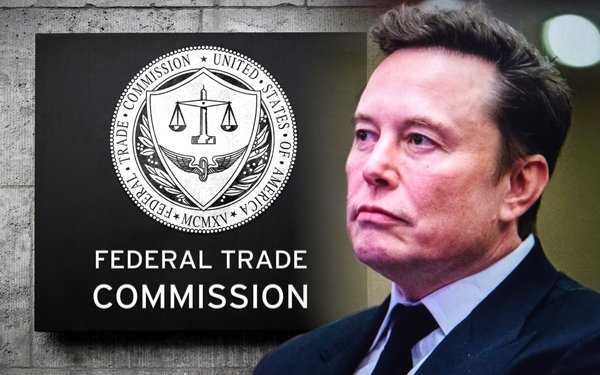
Elon Musk's X is petitioning the Federal
Trade Commission to vacate a 2022 consent decree that settled allegations that the platform misled users by asking for their phone numbers and email addresses for security purposes, but then drawing
on the information for ad targeting.
The settlement terms were "imposed on a company that no longer exists," X argues in a petition quietly filed last month.
"Every individual responsible for the underlying failures has left, and X has since built a world-class privacy and data-protection program that its own personnel regard as a crucial
element of the company’s culture," the company argues. "There is no consumer-protection
rationale to maintain a twenty-year regulatory regime over an entity that did not commit the underlying violations, and has never violated the order."
advertisement
advertisement
On Wednesday, the FTC sought comments on X's request.
The settlement stemmed from X's 2019 disclosure that it inadvertently allowed marketers to
target users based on phone numbers and emails collected for security purposes.
The company said at the time that the emails and phone numbers were mistakenly incorporated into an ad platform
that allows companies to use their own marketing lists -- which include customers' email addresses and phone numbers -- to target ads on Twitter.
X resolved the matter in May
2022 by agreeing to pay $150 million and to follow a number of conditions. Among others, the company promised to create a privacy and security program, obtain biennial evaluations of that program by
an independent assessor, conduct risk assessments before implementing or modifying new products, and respond to the FTC's requests for information.
When X settled the matter,
it did not admit or deny the FTC's allegations.
The platform, acquired by Musk several months after the settlement, now contends that complying has cost the company "close to
$17 million" in paperwork, and diverted resources from developing artificial intelligence technology.
"Every hour that X’s engineers spend preparing for biennial
assessments, responding to demand letters, or documenting privacy reviews ... is an hour not spent building AI tools that serve users and advance American competitiveness," the company writes.
X also argues that the order gives the government "a vehicle" to suppress free speech.
"The order in question functions as a loaded gun pointed at
constitutionally protected expression," X writes. "Maintaining a sweeping consent decree with standing subpoena-like powers over such a platform creates precisely the kind of ongoing coercive pressure
that risks chilling the marketplace of ideas."
This isn't the first time X has attempted to vacate the settlement. In 2023, the company petitioned a federal judge to scrap the consent decree. At the
time, X alleged that the Biden-era FTC's investigation into compliance “has spiraled out of control and become tainted by bias.”
X specifically alleged in that 2023
filing that since being acquired by Musk, the FTC issued 16 letters demanding information. By contrast, the agency issued a total of 28 demand letters to X between 2011 and 2022, according to X's
filing.
U.S. District Court Judge Thomas Hixson in the Northern District of California rejected X's request, ruling in November 2023 that he lacked authority to modify or
terminate an order issued by the FTC.
That same year, Rep. Jim Jordan (R-Ohio), chair of the House Judiciary Committee, questioned former FTC Chair Lina Khan over the agency's
investigation of X. The committee also issued a staff
report accusing the Biden-era agency of “harassing” X due to Musk's decision to reinstate accounts of prominent conservatives.
Khan alleged in response to Jordan that the FTC's investigation revealed that Musk told
employees to take action that would have violated the consent decree, but “longtime information security employees” at the company intervened and instituted privacy safeguards.
The FTC set a July 2 deadline for comments on X's petition.