One of the best parts about covering the
Cannes Lions festival this week is that it gets me out of my U.S.-centric perspective about the demise of Western Civilization... and puts me into the rest of the world's angst about the same. So I
pretty much knew what I was getting into when I attended today's "A Sense of Impending Doomscrolling" session, which included a heart-breaking presentation by Molly Rose Foundation's Ian Russell, a rage-against-the-advertising-platform's take down by Una Terra CMO Rupen Desai, a surprising new social media app
launch by W Founder Anna Zeiter, and cry-for-help/call-to-action plea from United Nations Senior Advisor on Information Integrity Charlotte Scaddan.
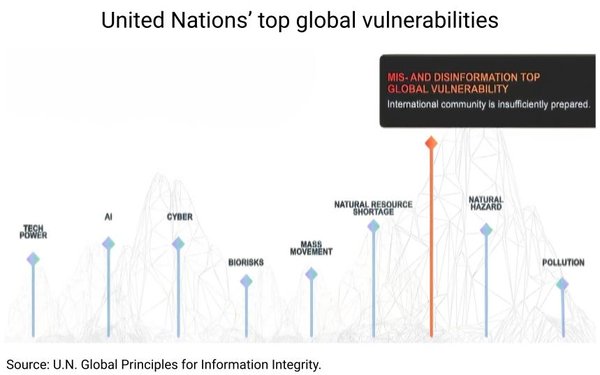
You can read about the U.N.'s information
integrity initiative here, but suffice to say it ain't good. Think cross between the Bulletin of the Atomic Scientists "Doomsday Clock" meets international aid crisis meets the World Federation of Advertisers' now defunct Global Alliance for Responsible Media.
advertisement
advertisement
Given GARM's demise, the capitulation Omnicom and Interpublic made to the Trump Administration's demands to further lay
off responsible advertising and media-buying, and what happened when Big Brands
tried to boycott Facebook, I was a little surprised by Scaddan's explanation for pitching the ad industry for support.
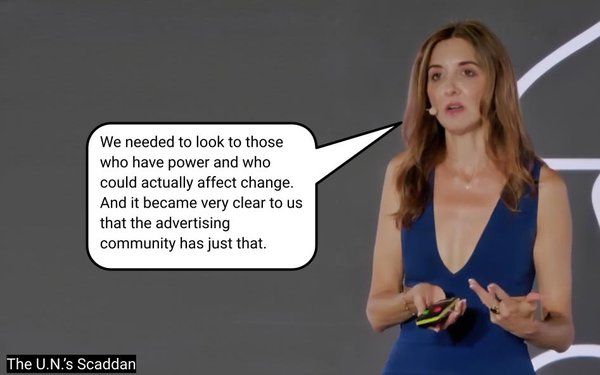
"We needed to look to those who have power and who could
actually affect change," she told festival attendees, adding, "And it became very clear to us that the advertising community has just that."
Clearly, she doesn't read MediaPost -- and
definitely not "Red, White & Blog -- otherwise she'd know what little power the ad industry actually has when it comes to influencing the policies of Big Tech, Big Government, or any other Big
Entity playing a role in global information integrity, or more likely, the lack thereof.
But you can't blame a gal for trying.
I'm not saying the problem isn't real. Or that the ad
industry can't play a bigger role in influencing its outcome. I'm just saying that based on the most recent evidence, it hasn't exactly been a poster child for supporting responsible information.
In fact, I've been meaning to address something that came out of WPP Media's recent mid-year update on the ad economy that I personally found horrifying.
It was related to WPP Media
Business Intelligence President Kate Scott-Dawkins observation that the current AI race is akin to the California gold rush, including an overriding sense of "manifest destiny."
"We
think about the Gold Rush — and the broader ideology of Manifest Destiny that fueled it — as we assess the current state of the advertising industry and the global economy in mid-2026,"
Scott-Dawkins writes in the report, acknowledging, "The parallels are not perfect, but they are striking enough to be instructive."
She uses the term six times in the report to explain the
overwhelming sense that a future dominated by highly capitalized AI technology companies is inevitable.
The part I found most ironic in her analysis is that advertising effectively is funding
its development, but has little if any influence on that inevitable outcome.
That scenario, to me, seems like a replay of Madison Avenue's role bankrolling the creation of the walled gardens
-- social media platforms in particular -- to the point where they got so big they didn't really need, much less care about, what advertisers actually have to say about their policies. (See what
happened when big brands boycotted Facebook above.)
In her defense, Scott-Dawkins noted that Big Tech, including the big AI developers, are actively working with big brands and the holdcos to
ensure certain standards like data privacy and security, but my point is about the bigger and longer term ramifications the technology will unleash, even as an earlier generation of social media
continues to spread misinformation, disinformation and is available to be weaponized by anyone who wants to exploit it. You know, what the U.N. is up in arms about.
I'd like to think that the
U.N.'s Scaddan gets the support she needs from the ad industry -- even if it's just those players outside the U.S. -- because she's right that the only way to influence these outcomes is via a strong
"coalition of the willing.
“We feel we have a moment of opportunity right now with AI," she continued, adding, "If more of the opacity that we see in the digital world right
now, gets baked in we can demand change and you all have that power. Advertisers can use your creativity and your budgets to ensure that we don’t make the same mistakes as we made a few years
ago.”
Either that, or don't complain when I post a "Red, White & Blog" column a year or so from now kvetching about why the ad industry failed to step up once again to help manifest
a destiny in which an awesome new media technology helps improve society, not devolves it.
On that note, check out W Social. It can't
hurt.