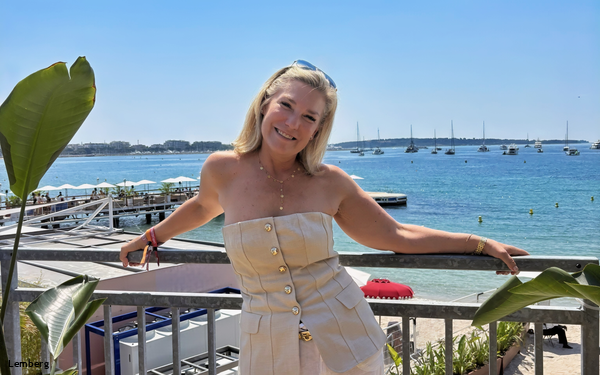
CANNES -- Over thirty years ago, I first came here as a young strategist working
alongside Jean Marie Dru to help develop and introduce the concept of "disruption" -- the idea that brands grow by overturning conventions, disrupting them with a bold enough vision to redefine the
legitimate role they can play in people's lives and in the marketplace.
Creativity wasn't simply about producing memorable advertising. It was about creativity for business's
sake.
Returning
here this year, I expected almost everything to have changed. To some extent, it has. In many other ways, it has not.
advertisement
advertisement
The festival itself had exploded beyond the Palais, with hundreds of events stretching up
and down the Croisette.
Brands have become the stars almost more than the work itself. The vocabulary has changed too.
Every discipline now has its own language, acronyms and
frameworks. Yet the more I listened, the more I realized that much of the new vocabulary is mostly just industry-specific synonyms for remarkably familiar ideas.
And while the vocabulary has changed,
our questions have not.
We still ask essentially the same brand-led questions:
- Should we be brand identity-led
or performance marketing-led?
- How do brands build communities?
- How do they stay culturally relevant?
- How do they create engagement?
- How do they convert attention into business growth?
If -- as much of the discussion at this year's festival suggests -- the world
has changed so fundamentally, shouldn't the questions we're asking also have changed?
Perhaps it's not the answers that need disrupting. Perhaps it's the questions.
The fact is that we now live in a
fractured, polarized world increasingly shaped by algorithms that divide us, reinforce echo chambers and amplify disagreement. Feelings override facts. We live in a world of debate, discord and
constant conversation.
Think about it. People disagree about almost everything: politics, brands, sports, music, luxury, AI and culture itself.
Cannes is simply a microcosm of that
world.
Everywhere I went, people were debating. Brand-building versus performance marketing. Brand identity versus activation. AI versus human creativity.
Top-down versus bottom-up. Online versus real-world experiences. Creators versus agencies. Long-term brand equity versus short-term results.
For me, the "Digital Fight Club" event became the metaphor for the week.
Debate has always been at the heart of culture. It reflects a deeply human need for
self-definition and self-expression.
The difference today is that everyone has a voice. Debates are public. Everyone can -- and wants to -- express themself, be heard, feel seen and validated,
find others who agree or disagree, and increasingly construct their identity through the conversations they choose to join. Or the debates they choose to have. People no longer simply consume culture.
They create it. They participate in it.
None of the debates I heard here had a single, correct answer. But they all revealed something important. People cared enough to argue. Even to
fight.
For
years we have treated conversations -- even buzz -- as the destination. I increasingly believe they are the window.
Debate is what feelings look like in public. Nobody passionately defends, criticizes,
shares, recommends, boycotts or advocates for something they don't care about.
Debate is the public expression of deeply held feelings. It reveals identity, aspiration, frustration, belonging and belief.
Feelings activate behavior. Period.
If debate is what feelings look like in public, then conversations around those debates -- and increasingly the beliefs and tensions that fuel them
-- become one of the richest windows into what people actually feel. And the more intensely people feel, the more inclined they are to act, participate and defend their sense of self.
And that changes
everything.
Instead of asking,"What does the brand want to say, and to whom?,"perhaps we should be asking what people are feeling about themselves, their place
in the world and the identity they're trying to express.
What tensions are people trying to resolve?
What are our dissenters saying about us? What are our fans saying?
Where do they
agree? Where do they disagree? What is the debate?
What conversations are those feelings already creating?
Where does our brand fit? How and why?
What role does the brand play in
culture and for consumers today?
What role could it play? What role should it play?
Which conversations has the brand earned the legitimacy not simply to join, but to actually
convene?
How can
a brand authentically help people navigate those tensions?
For me, these questions are a critical way into "disruption" today.
The key way to disrupt is by understanding, connecting with and activating the feelings
that inspire people to participate in conversations they have already begun and then find ways for brands to earn the legitimacy to lead those conversations through action, experience and
creativity.
Brands don't create conversations. They earn the right to lead them.
Not because they manufacture controversy. Not because they chase the
latest cultural moment. But because they understand the feelings already driving participation, have a meaningful point of view, and can authentically help people navigate the tensions at the heart of
culture and the markets in which they play.
That is where strategy and creativity become more important than ever.
Their role is no longer simply to interrupt people or create
awareness. Their role is to transform insight into participation -- to create ideas, experiences and conversations that make people feel understood, seen, heard and validated.
Their role is to
inspire people, not simply to watch or scroll, but to join in.
The sequence is remarkably simple.
Feelings inspire participation.
Participation builds community.
Communities create enduring business value.
Thirty years ago, we challenged
brands to disrupt the conventions limiting their growth. Today it's worth asking whether our own industry has developed conventions that limit the questions we are asking.
Perhaps we've become
extraordinarily sophisticated at understanding brands, channels and technology.
What if our next strategic leap is becoming equally sophisticated at understanding, quantifying the economic value of specific
feelings to connect brands to their most valuable audiences and then activating them?
Not becoming less brand-led. Becoming more feelings-led.
Brands that act more human and relate in a more human way can understand,
connect with and activate feelings that matter most won't simply earn attention. They'll earn participation.
And participation builds community.
Communities build enduring value.