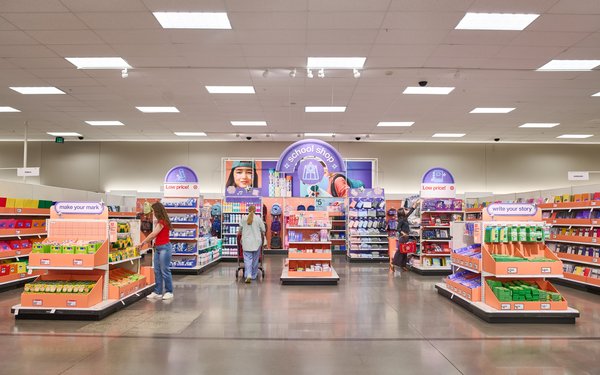
While there is always a same-old quality to
back-to-school marketing, Target is betting that newness will win the day this year.
The retailer just launched its annual BTS push with the claim that 50% of
its items are new, backed by a large slate of fresh and expanded partnerships. Some are aimed at the trendy, like LoveShackFancy, Hollister and Overtime, and some are going for the thrifty, with
ultra-affordable options from owned brands like Cat & Jack, Up & Up and Threshold.
Among the newsiest: The Target x Hollister collection includes
apparel and accessories, plus home products — bedding and dorm décor — a first for that brand, with most items under $50. The LoveShackFancy x Target collection, designed for tweens
and teens, brings the brand's feminine aesthetic to apparel, accessories, beauty and school supplies, with most items under $25.
advertisement
advertisement
Target Circle members get
added savings, with 20% off for teachers and college students.
The Minneapolis-based retailer is running two separate campaigns: "Do Your Thing," aimed at
K-12 shoppers and emphasizing self-expression, and "Let's Run to Target," enticing college shoppers with a focus on dorm inspiration and shared experiences.
Target is out of the gate earlier than competitors, hoping to reach shoppers looking to make the season more manageable — and more organized. Early indications
are that parents are prepared to pay more than they did last year, because inflation means they are paying more for everything this year.
A new PwC
study pegs average family spending at $922, with 47% expecting to spend more than last year — up sharply from 35% a year ago. But how they shop is shifting. Only 70% plan to shop in stores, down
from 79% last year, while more are turning to online marketplaces, brand sites, social media and AI tools to research and compare.
Kids themselves are
increasingly driving the bus. Among parents who shop ecommerce, 61% let their children add items directly to their online cart.
About 75% of parents expect to
spend at least $100 on clothing and shoes, averaging $278 per household — more than twice what they'll spend on actual school supplies. Tech (laptops, tablets, calculators, headphones,
wearables) will claim another $222 per household.