Now that it has spent months
addressing the rising grocery prices still stalking American shoppers, General Mills says its plans are in place to return the CPG giant to profitable growth. But with U.S. consumers' perceptions of
their household food budget reaching what the New York Times recently called “a grocery price emergency,” observers are skeptical of how quickly the CPG giant can pull that off.
After a year of lowering costs for stressed-out consumers, General Mills execs presented fourth-quarter and full-year results and are optimistic that the company can enter the next year
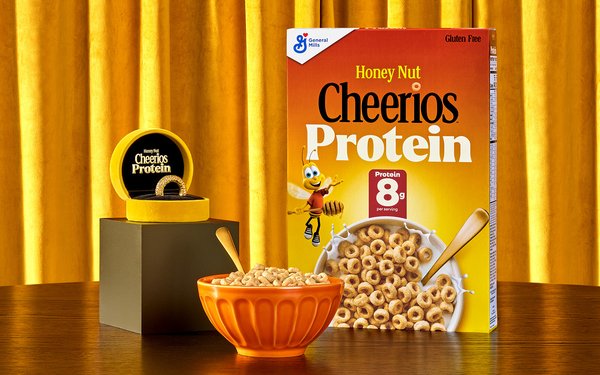
well-positioned to grow again, building on what it calls the “remarkability” of its brands. That includes big investments in protein, which have helped both its Cheerios and Nature Valley
brands recover -- and grow -- in household penetration. A focus on healthier ingredients will continue to bolster performance at brands like Annie’s. And execs think tapping into a growing
preference for bold flavors will pep up already-healthy sales at Old El Paso.
advertisement
advertisement
For the fourth quarter, sales eked out a 1% gain to $4.6 billion, from $4.55 billion, and an operating loss
of $2.09 billion, compared to operating profits of $504 million in last year’s fiscal fourth quarter. For the full year, sales fell 5% to $18.42 billion, from $19.49 billion in the prior fiscal
year, and an operating profit of $885.8 million, a 73% decline.
In retail in North America, sales fell 4% in the quarter, and 11% for the full year, dragged down by the sale of its yogurt
business. Pet food sales -- a segment the company is increasingly invested in -- gained 4% for the quarter and 6% for the year.
With price investments behind it, “our plans are designed
to drive a step change in remarkability, with a sharper focus on product, packaging, and brand communications to strengthen topline growth,” said Jeff Harmening, chairman and CEO, in an earnings
call. “This includes a significant increase in innovation and renovation centered on the benefits that matter most to today’s consumers.”
While results largely met
expectations, Harmening acknowledged how rough the environment has become, with recent consumer sentiment in the U.S. hitting record lows. “We saw slower category volume growth, impacting
both our human food and pet food businesses. And as consumers remained pressured, we saw them buying more on promotion and less at everyday prices, driving a less profitable mix of volume.”
The company called out Totino’s frozen pizza and Wilderness pet food as having especially weak results.
Observers note the company's progress: flat organic sales are better than last quarter's 3% decline, and the company either gained or held onto market share in
65% of its top U.S. categories. But there’s no avoiding the reality that “category angst persists,” writes Kristoffer Inton, an analyst who covers CPG for Morningstar. “General
Mills' strategy to reinvigorate growth has struggled against a difficult economic backdrop.”
Steve Powers, an analyst who covers the category for Deutsche Bank, describes General Mills’ progress as “still a story of recovery, not yet
stabilization.”
Meanwhile, there’s growing evidence that the angst CPG companies are feeling is reaching crisis levels for its customers. A New York Times opinion piece
headlined "We Crunched the Data: There's a Grocery Price Emergency in America," argues that grocery costs have become the single biggest source of financial strain for American households —
outpacing housing by a wide margin, according to survey data gathered by authors Lael Brainard and Rohit Chopra. Meat, particularly beef, emerged as the most painful expense of all, with prices up
roughly a third over two years.