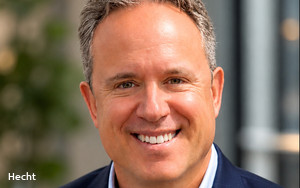
Hospital emergency rooms get clogged
up by patients whose conditions don’t need to be treated in such locations, Lon Hecht tells Pharma & Marketing Insider. Too often, they've been sent to the ER by urgent-care
physicians who also can’t treat those conditions.
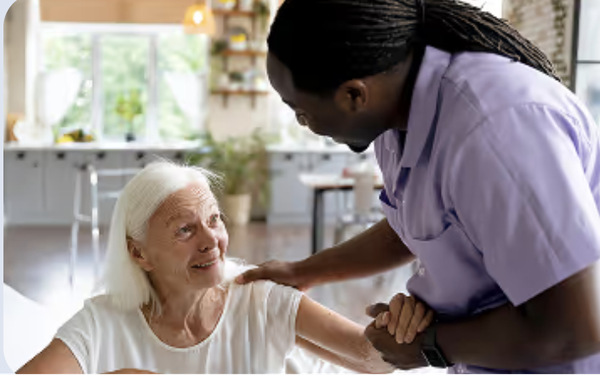
Four years ago, a group of ER physicians formed Care2U, where Hecht serves as CEO. The aim: provide New York metro patients -- in their
homes -- with something that falls in between urgent care and the ER.
And it’s definitely not akin to old-fashioned house calls, Hecht emphasizes.
Compared with urgent care
facilities, Hecht says, “we provide higher-acuity care…with about 80+ percent of the capabilities in an ER.”
“For a true life-threatening emergency -- a stroke, a
heart attack, a traumatic head injury while on blood thinners -- you should still go to the hospital,” he says. “But you'd be really surprised at what treatments can be managed safely in
the home -- a flare-up from congestive heart failure or COPD, pneumonia, a complicated urinary tract infection, or cellulitis.”
advertisement
advertisement
The provider primarily focuses on more serious cases that
fall short of needing an ER.
Care2U takes referrals from hospitals (“they love us, particularly to help prevent readmissions after a hospitalization has happened”), insurance
companies and even urgent care facilities, Hecht says.
While he wouldn’t name any Care2U partners beyond “some pretty prominent New York hospitals all through the five boroughs,
Long Island and Westchester,” a perusal of the provider’s website yielded the following names: Catholic Health System, IPANY (the Independent Practice Association of New York), Aetna, and
UnitedHealth’s Optum.
Hecht says that Care2U employs 50 to 100 full-time, part-time and per diem physicians to make its home visits
Just don’t call them “house
calls.”
“Old-fashioned house calls -- think of the father in ‘Dirty Dancing’ who carries the black bag -- are more for your typical primary care,” Hecht
says, “for an infection, maybe some kind of rash. This is true hospital- level care that we're bringing to the home.”
Another difference from the old days is Care2U’s video connection.
After consulting with either the patients themselves, or the referring party, Care2U sends either a nurse practitioner, a physician assistant or a paramedic to the home within two to four hours,
which Hecht notes is “typically less time than it takes to get to the ER and actually be seen in an ER.” The attending healthcare provider than brings in a physician via telehealth.
“It’s two providers, but one is in the home,” he explains.
To date, Care2U has been bringing in its patients through referrals or word-of-mouth, with paid marketing efforts
limited to tools like Google Ads. “When people are searching and they’re in a high-need state, those are the kind of things that will convert to a visit,” Hecht says.
While
noting that Care2U serves “anyone over 18 years of age,” he acknowledges that Medicare members are the most common patients due to “chronic conditions and higher needs.”
But Care2U’s patients have been getting younger as the years pass, he says.
Helping that happen is Care2U’s focus on cost-of-care, which Hecht says “is a fraction of the
cost of hospital-based or ER-based.”
For one thing, “it's usually a specialist copay rather than an ER-level copay or hospital -level coinsurance, which gets outrageously
expensive.”
“We're about a third of the cost of Medicare -level care than in a hospital,” he brags. “We're about a sixth of the cost of typical commercial insurers like
United, Anthem and Aetna.
“It’s a huge financial savings to the patient, to the [healthcare] system, to the insurer. Everyone wins.”
In addition to health
systems and insurers, Care2U also targets its outreach to such audiences as assisted living communities and home health services “because there's a really strong value proposition for all of
them. “
While tools like LinkedIn are used somewhat, he says, that outreach is done mainly through relationships built up over the years by Care2U executives.
The firm has been
so successful – growing at over 100% annually -- that Hecht says expansion is coming into other markets “in the next year or two.” This could be in adjacent markets like New Jersey
or Connecticut, or beyond. “We have partners like larger insurers in other states that are very interested in us coming there,” he says.
Urgent care, he reminds me, was little
known 15 years ago. “We’re in that spot right now. If you look three to five years down the line, people are really going to understand that you can get this ER and hospital-level care in
the home at a fraction of the cost.”
Starting with the idea of avoiding hospital visits, Hecht says, “if they need to be admitted to our service, we can do multi-day episodes
right there.” And, unlike some hospitals, which may also do treatments at home, patients don’t need to visit the ER first.
“So we've really changed this model quite a
bit. Five to 10 years from now, it's going to be standard of care.”