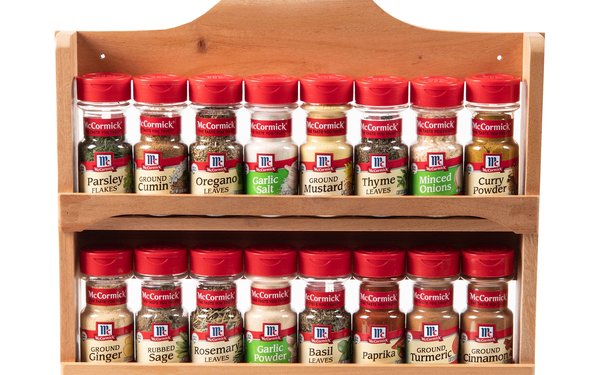
McCormick, the spice and flavors giant, commissioned a finely ground look into what people really mean when they say value is high on their grocery list. Price is
part of that equation, of course: 74% say everyday low prices make a shopping trip feel more valuable. But other factors matter almost as much — 64% say something other than price is their
single most important driver.
What that means, explains Liam Hickey, head of research at Knit, which conducted the research, is that shoppers are effectively
writing their own hierarchy of decision-making, one that weighs trust and convenience alongside cost. Buying on price alone, he says, is a gamble on quality — and a surprising finding is that
shoppers' tolerance for that gamble isn't uniform. It varies sharply by category.
advertisement
advertisement
Fresh food, especially meat and produce, is where shoppers hold the line:
only 19% say they're willing to trade down. Hickey said that surprised him personally, since those were trade-offs he made himself years ago as his household's primary shopper. "That is where we're
seeing the most stickiness, the most holdouts," he said. "People are still unwilling to sacrifice." On pantry staples, by contrast, 45% are willing to trade down.
The study is based on 537 grocery decision-makers, using a standard quantitative survey; a subset of 102 respondents also completed AI-moderated video interviews,
which let researchers capture more of shoppers' own language alongside the survey data. The findings also put dollar figures on how consumers weigh these choices: 72% will drive to a second store to
save $25 to $30, and 43% are happy to pay a delivery fee if it means avoiding a 45-minute round trip.
The research is meant to give both brands and retailers
new ways to think about pricing, loyalty, merchandising, and the in-store experience — relevant both to retailers pushing their own store brands and to national marketers competing against
them.
Hickey pointed to easier access to information as one reason private labels keep gaining share: Shoppers can now look up a store brand's reviews
instantly rather than relying on the brand loyalty they may have built up over a lifetime of shopping. He offered an example of how that same risk calculation applies to buying a new spice --
let’s say, Chinese Five Spice -- for a single recipe. The shopper isn't sure whether an $8 jar will earn its keep in the pantry over time, and that uncertainty itself is a kind of risk. Better
on-package information about other uses or flavor pairings, he said, can lower that risk by showing shoppers they'll use the product more broadly.
Even that
calculation comes with its own trade-offs. About 54% of consumers say they're responding to rising costs by cooking more at home, and gambling on that new $8 flavor may feel like a bargain next to the
cost of an equivalent restaurant meal at their favorite Chinese restaurant. "A seasoning, sauce, spice blend, or pantry staple can change the emotional value of the meal," the report notes.
The point isn't precisely how much money shoppers save. It's whether they come away feeling the trip, whatever it cost, was worth it. Hickey suggested that retailers
like Costco and Aldi, with generous satisfaction guarantees, may have been especially effective at building confidence in their private-label lines by lowering the perceived risk of trying them.
Ultimately, he said, these are snap decisions, made in milliseconds at the shelf — and what shoppers are really chasing isn't the lowest price, but the confidence that they made the right
call.