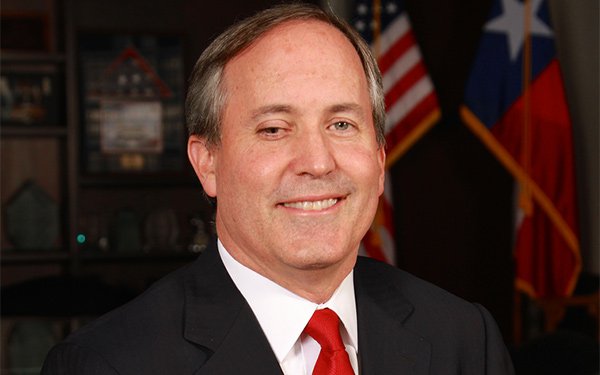
Texas Attorney General Ken Paxton is
urging a federal appellate court to reconsider its earlier ruling that blocked enforcement of a state law requiring social platforms to screen out "harmful" content to minors.
A divided panel of the 5th Circuit Court of Appeals ruled in July that Section 230 of the Communications Decency Act overrode portions of the Texas Securing Children Online through
Parental Empowerment Act (HB 18) that would have forced social media companies to use filtering technology to block certain content to minors --
including material that “promotes,” “glorifies,” or “facilitates” eating disorders, self-harm, substance abuse, and “grooming ... or other sexual exploitation
or abuse.”
Paxton argues in new that the panel wrongly analyzed Section 230 -- a 1996 law broadly protects companies from liability for content uploaded by users.
advertisement
advertisement
"Under the panel majority’s rule, a state may not impose any content-moderation duty on any online platform, no matter how harmful the material or how young the audience," Paxton
contends in papers filed Wednesday with the 5th Circuit.
He is seeking a new hearing in front of the entire appeals court.
The Texas law, passed in
2023, drew two separate legal challenges -- one by the tech industry groups NetChoice and Computer & Communications Industry Association, and another by a coalition including the group Students
Engaged in Advancing Texas and the Austin-based agency Ampersand Group.
U.S. District Court Judge Robert Pitman in Austin enjoined enforcement on First Amendment grounds.
He wrote in a September 2024 ruling that provisions requiring
companies to filter “harmful” material are so broad and vague that they would allow the government to censor speech that is protected by the First Amendment.
The
appellate judges upheld the block, but said they were doing so solely due to Section 230, and weren't deciding whether the law violates the First Amendment.
The statute also
has provisions prohibiting targeted advertising to minors without parental consent, . and requires social platforms to make “commercially reasonable” efforts to block ads to minors that
“facilitate, promote, or offer a product, service, or activity” that's unlawful for minors in Texas.
Pitman also blocked the ad-targeting restrictions in 2025, writing: “There may exist a compelling state interest in promoting teen mental
health by limiting teens’ exposure to certain advertising, but nowhere does the court see a specific interest articulated for removing teens’ access to targeted advertising of all
kinds."
The appeals court lifted that portion of the injunction, ruling that Students Engaged in Advancing Texas and Ampersand Group aren't "directly"
regulated by the law and therefore lacked "standing" to sue over the ad-targeting restrictions.