Sponsorship revenue for college athletes -- resulting in
appearance in TV commercials may be seeing big changes with regard to a new Senate bill that was passed about college sports.
Good news for the overall sports related TV businesses -- brands
and networks. But with tougher limits on overall earning potential for perhaps higher-profile athletes.
This comes from a recently passed Senate bill on college sports revenue, which looks to
offer up more regulation for the business.
The focus is NIL deals -- deals approved by a 2021 NCAA policy which has allowed college student-athletes to monetize their Name, Image, and Likeness
(NIL) by making deals with outside marketers and brands.
Bigger college athletes in recent years on TV included Caitlin Clark (Iowa Women’s basketball), Angel Reese (LSU Women’s
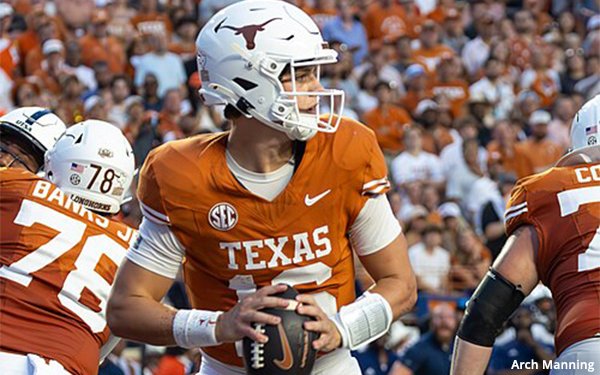
basketball), Shedeur Sanders (University of Colorado football), and Arch Manning (University of Texas football).
advertisement
advertisement
The policy change transformed last year, where over 300 Division I colleges
could directly share up to $20.5 million annually of their own revenue with athletes.
Since then advertising deals have grown.
While elite quarterbacks and basketball stars secure
headline-grabbing multimillion-dollar valuations, the average individual approved NIL deal is valued at about $7,344.
Other college athletes -- especially for those non-high-profile sports
(football and basketball) make smaller or no revenue.
On average, the typical college athlete in those high-profile sports makes a relatively modest amount from NIL deals, with total annual
earnings -- through his entire college playing years -- averaging around $30,735.
The new bill would shift colleges to a
new revenue-sharing level with college athletes of nearly $50 million versus a previous NCAA settlement of $20.5 million and $21.5 million.
At the same time, it could result in readjusting
“valuations” of those athletes -- which set a baseline for brands who want to make deals with those athletes.
Under the old system, University of Texas quarterback Arch Manning has
been valued at $6.8 million. Manning has deals with Panini America (trading cards) and EA Sports (video games)
But under the new system, the bill is expected to deflate wealthy alumni
booster-backed contracts.
Those deals -- for local charity work, autographs, and appearances -- can make up the lion’s share of an athlete's sponsorship revenue for their college
career.
Why was the bill initiated in the first place?
Co-authored by Senators Ted Cruz (R-Texas) and Maria Cantwell (D-Wash.), it was intended to eliminate a fragmented system -- a
patchwork of state laws.
The bill intends to eliminate the seemingly out-of-control “bidding wars” for athletes. And finally, it has been viewed as protecting the NCAA from future
lawsuits.
Overall, the bill is intended to stabilize the marketing environment overall -- better deals for TV-targeted marketers and brands and ultimately TV networks.
Brands and TV
networks have both been subjected to high costs related to sports on TV -- brands with high advertising pricing, and networks with soaring sports TV rights fees.