While “I’m fine”
is the easiest response to “How are you?”, Lancôme knows it’s not always true. In one of the largest purpose-driven campaigns in its history, the company is linking the
“I’m fine” message to World Mental Health Day and enlisting some of its best-known brand ambassadors to carry it.
Demi Moore, Christy Turlington, Zoë Saldaña and
Vanessa Kirby will share their personal stories as part of the campaign, helping challenge stigma and encourage more open conversations abour mental well-being. With a dedicated website, the company
is offering free, clinically validated anxiety and depression self-assessments, access to expert-led educational resources, and ways to connect with trusted mental health organizations and
support.
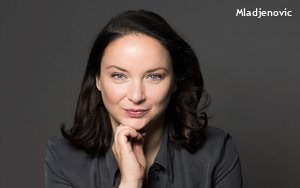
“We’ve talked about happiness for many, many years,” says Rachelle Mladjenovic, general manager of the L'Oréal-owned brand. “Our biggest franchise in
the U.S. is La Vie Est Belle, or Life is Beautiful.” The fragrance was first introduced in 1949, and those words are central to the brand’s essence, she says.
advertisement
advertisement
“We like to say
that La Vie Est Belle is a choice, and we accompany you on that journey. We’re hoping to be there in that moment when women take some self-care, too, to help our consumers live their lives in a
happy way,” she says.
The challenge, she tells Marketing Daily, is finding ways to break through the layers of stigma that surround anxiety, depression and other mental
illnesses. And while the brand was certainly aware of that when it commissioned the new research with Ipsos, Mladjenovic was surprised by the results: 80% of women admitted they routinely say
"I'm fine" when they’re not. That’s up 4 points from last year. And 72% regret hiding how they truly feel. And mental-health topics are disproportionately taboo, with 60% of respondents
saying that their mental health is harder to discuss than fertility or menopause.
“Those numbers are really profound,” she says, “and we wanted to be part of this
important conversation in a positive way.”
Approximately one in three women will face an anxiety or depressive disorder in their lifetime, twice as many as men. Some of the factors are social and cultural, including uneven domestic
responsibilities. Others are physiological, including postpartum adjustments, perimenopause, and menopause.
Many concerns keep women repeating the “I’m fine” prevarication,
with 52% saying they hold back because they don’t want to burden others, and 38% saying they believe they should cope alone. About 31% don’t want to seem vulnerable, while 29% feel
pressured to project a positive image.
The effort is a partnership with the Anxiety and Depression Association of America and HealthyWomen, a nonprofit dedicated to educating and empowering
women to make informed health decisions.
By 2030, the program aims to have helped three million individuals globally to recognize the early signs of anxiety and depression. “We’re
hoping this makes people feel a little bit safer to have that conversation,” Mladjenovic says. “Happiness can be a choice, and optimism is something we’re always trying to evoke.
This campaign can help our consumers get there.”