At a moment when many CPG companies are achieving tepid
dollar growth -- with volume sales actually declining -- marketers who headed to this year’s Association of National Advertisers' Masters of Marketing event looking for ideas got plenty from the
meeting’s early presenters.
Both Marc Pritchard, Procter & Gamble’s chief brand officer, and Manolo Arroyo, executive vice president and chief marketing and customer commercial
officer for Coca-Cola, offered candid insights into the struggle to inject new life into struggling brands.
Arroyo started with three major problems Coca-Cola faced in 2020. First, it
wasn’t winning over new fans and hadn’t for 20 years. All growth came from more frequent consumption, which meant that the average age of its customers was growing faster than the general
population. Second, it was late to digital advertising. Third, it was dangerously fragmented, with 2,000 different marketing programs, 3,000 annual product launches and more than 6,000 ad
agencies.
advertisement
advertisement
The biggest problem? The company relied heavily on a metric it called Brand Love, a perception KPI that offered little clarity -- it could be rising when sales were falling.
“I do not believe anymore in love,” he said. “We needed to shift the paradigm and stop going after a metric that was not driving our business forward. We decided to shift to
increasing our total consumer base, which is a behavior-driven metric as the primary correlation and causation of growth.”
With that as the universal starting point, the company began
pruning the product portfolio, shrinking from 400 brands to close to 170, with a mix of global, regional, and locally relevant brands in all beverage segments. Next, it began to look for bolder
innovations, and dove into digital, looking for ways to redesign a clumsy marketing operating system. He projects digital will account for 70% of the company’s media spend this year.
That includes creating plenty of digital content which people can access via a QR code on packaging, a big component of the company’s successful FIFA World Cup push this summer. Next up:
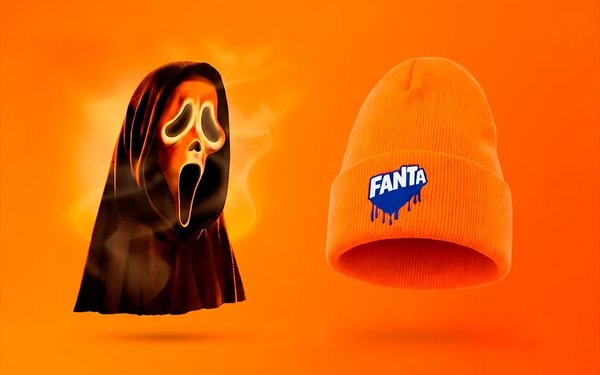
Rather than partnering with existing horror-film franchises, the company is entering its second year of cooking up original content for Fanta, aiming to introduce more consumers to hordes of thirsty
subway zombies.
Such moves, he said, helped the company clarify one of the biggest questions: “How do you build more billion-dollar brands?” (The company currently has 32.)
The resulting formula, he said, starts with a brand as a promise, “delivered through experiences that leave a long-lasting memory. It's about memory structures that trigger a behavioral
change, and that generates an economic value.”
The change had to start with a shift of the company’s internal culture “that is more about intellectual honesty. It’s
about changing from a know-it-all organization to a learn-it-all organization, being extremely close to what's going on in the marketplace with consumers."
P&G’s Pritchard also took
attendees under the hood, showing several different ways it has returned the Pampers brand to growth. While P&G is working hard to include AI in as many marketing processes as possible, all the
big ideas share one thing in common: they come from people-based insights.
One example comes from China, a market that is perhaps five years ahead of the U.S. in digital fragmentation, with a
declining birth rate. Pampers wanted to rev growth, so the team “went human,” he said, asking new moms, "If your baby could speak, what do you think they would say to you? And they
uncovered a quiet, deeply vulnerable human truth: 'I'm not sure if my baby can feel my love.’”
That’s not a data point, Pritchard said. “That's a heartbeat.”
In the U.S., it launched an apology tour for Pampers Wipes, headlined by comedian Iliza Shlesinger, focusing on innovations that let parents yank out one wipe at a time.
"Pampers is winning
Gen Z across all baby stages of development with a 60% share of voice, No. 1 follower growth, positive sentiment, and returning to share growth,” he said. “And Pampers is also winning in
China, growing double-digit sales three years running in the most digitally and socially driven consumer market in the world.”
Another example, he said, was Mr. Clean. “Mr. Clean
is one of the most recognized icons in America, but the brand was struggling and urgently needed to get growing.” The small-budget brand needed to get scrappy, and “came up with the idea
that maybe, after 68 years on the job, it was just time for Mr. Clean to hang up his iconic white T-shirt and retire.”
He did, and a social campaign followed his post-retirement
pursuits. But it lasted just two weeks, before he put his Maui retirement home on the market and got back to work. With a low budget, zero TV, and a social-only launch, digital commerce jumped 50%,
and total brand sales grew 7% during the stunt. Mr. Clean also hopped on the “Everything Shower” trend, keying into the multistep rituals currently dominating beauty conversations,
“gifting beauty and lifestyle creators with the new shower and tub scrubber as if it were a luxury product drop.” Pritchard added: “Mr. Clean is now the talk of the town for showers,
and he's growing in double digits.”