What if consumer-packaged goods marketers had the technology to
identify and a database to keep track of purchases for a specific brand and product, and to identify the store where they were sold for any time and day -- and could take that data to build something
similar for lookalike audiences based on AI causal analysis?
Becausal, after extensive testing with more than 20 agencies, launched a platform using artificial intelligence (AI)-driven causal
analysis, offering audience segmentation and searchable CPG purchase datasets and helping brands to understand why and when consumers buy.
The platform also enables the creation of lookalike
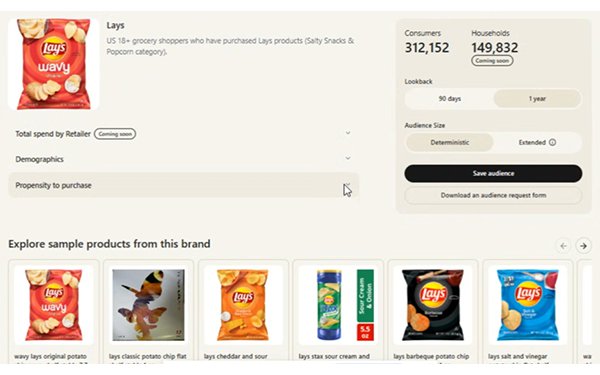
audiences using AI based on real shopping behavior and offers audience data that identifies "total spend by retailer," "demographics," and "propensity to purchase."
For marketers, it offers
precise audience targeting, personalized, insights into new product development, and the ability to send relevant messages to consumers.
advertisement
advertisement
Early adopters -- advertising agencies and CPG brands
-- have asked for this type of data.
Today the platform is in closed beta, but Becausal will open it to additional users in the new year.
Retailers can use the tool to understand
the market and grow their market share.
Chuck Ennis, Becausal chief commercial officer and product manager, told MediaPost it is the only place to directly access Walmart purchase data outside
of Walmart, which typically represents 40% of CPG brands’ all commodity volume v. active cash value (ACV).
Becausal, which rebranded from ScanBuy, spun out the data business in April. Ennis described the
dashboard that displays the data as something similar to a retail media dashboard.
The data helps marketers justify marketing and advertising budgets. It can tell brands things like why the
frequent buyer of salty snacks waited a month to repurchase the Lay's chips at Walmart, when they historically bought the product at Kroger.
In other words, the deterministic data combined
from mobile shopping apps, direct feeds from retailers, and loyalty card feeds, can help brands understand the number of consumers who recently purchased a specific product and from where.
It
does this by allowing the platform to cross-map the data to the retailer for a specific product. The data identifies when a brand or a retailer wins or loses business, and to what other brands or
retailer, even down to the product, said Ennis.
“If they are a Lay’s lapse buyer, the data can tell the brand why,” Ennis added. “If someone still buys in the category
of snacks, yogurt, or breads, the data in the portal can identify the audience.”
Marketers can target consumers who stopped buying products at one retailer, and began buying them at
another through Becausal’s data, for example. CPG tend to license the data to supplement their own first-party data, and agencies want it for audience building.
The database
“CPG Data Store” supports about 20 agencies and brands and houses about 8,000 audiences, with 16 million monthly active users (MAU). It helps marketers find brand-, product- and
retail-level insights. Brands can search these databases for free.
Becausal has deterministic, multi-sourced purchase data on three million consumers representing $300 million in purchases
across 445,500 products. The data is updated weekly and allows marketers and retailers to build and explore granular audience queries through a visual user interface.
“If you target
consumers who like snacks, they might not like Lay’s, so you have wasted ad budgets,” Ennis said.