New consumer research from performance media agency Net
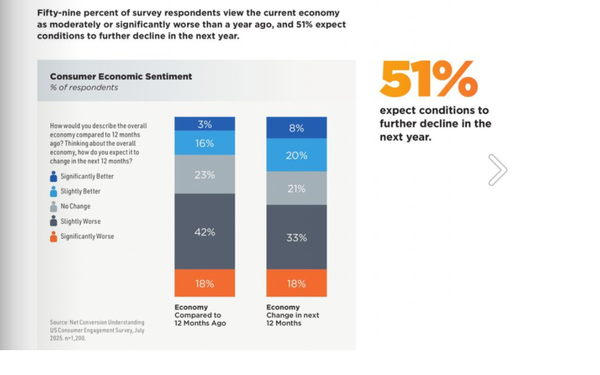
Conversion finds that while economic pessimism is receding, spending restraint has become a permanent habit.
Ninety-three percent of those polled in the agency’s survey
(via Pollfish) report changing their approach to spending in the past six months, which the agency concludes signals a “new normal defined by intentionality.”
advertisement
advertisement
The survey
results, outlined in New Rules for
Consumer Engagement, polled 900 U.S. adults in January on how economic pressures, AI tools, and media fragmentation are reshaping purchase decisions. It’s the
second annual edition of the study.
"What started as a response to economic pressure has become a permanent change in how consumers research, evaluate and commit to brands,"
says Haley Gribben, Strategy & Insights Manager and Chief Storyteller at Net Conversion.
Tariffs are forcing more fluid purchase behaviors, per the
report. Three-quarters of consumers say tariffs are actively influencing their buying decisions. Thirty-eight percent have switched to a cheaper brand regardless of country
of origin, 29% have delayed purchases expecting prices to drop, 28% have accelerated purchases expecting prices to rise, and 26% have switched to U.S.-made products to avoid import
costs.
AI is now firmly embedded in the purchase journey, the report finds. Nearly two-thirds of consumers (64%) now use AI tools to
research purchases, up from 45% in 2025. Of those, 57% say AI has increased the number of sources they consult.
Creative messaging can be a decisive factor for undecided
shoppers. Twenty percent said they were swayed to switch brands by a compelling ad in the last quarter. Consumers cite relatability, authenticity, and humor as the top
reasons an ad is "worth watching."
Brand loyalty is stabilizing but remains fragile, according to the report. Thirty-four percent now say they are less
loyal than a year ago, down from 40% in 2025. The shift suggests that while price sensitivity still drives behavior, brands that consistently deliver value are beginning to rebuild
trust.
Video streaming is increasing with 52% spending more time with streamers now versus a year ago. But price
sensitivity is significant with nearly one in five consumers under 40 expressing an interest in switching a paid subscription to an ad-supported version within the next year.