Luke Perkins shares why AI produces
“correct” work but not meaningful ideas, how the 1.7-second attention window is changing creative, and why lived human experience still drives the most impactful briefs today.
At our
last CPG Summit, you shared that your team experiments with AI daily and blocks two hours every Friday morning to dedicate time to using the tool. What’s the most unexpected learning that
has come out of this discipline?
Honestly, the biggest surprise wasn’t what AI could do — it was what it couldn’t. When you use the
tool consistently, a very clear line emerges. AI is excellent at producing briefs that are correct. It synthesizes category data, maps the competitive landscape, articulates functional benefits
cleanly. But the best briefs we’ve ever written have never really been about being correct. They’ve been about finding a felt truth — a cultural tension, a moment in someone’s
life that a brand can actually mean something inside of. That part requires someone who has lived in the world, who has felt emotion, heartbreak, laughter, etc. The Friday discipline didn’t just
make us faster. It made that gap more visible, and honestly, it made us more intentional about focusing on the human work that continues to make the biggest impact
advertisement
advertisement
If briefs are getting better with AI, what human inputs do you believe still make the biggest difference in the final
work?
Look, the stuff that makes a brief great has nothing to do with a marketing course. It comes from everywhere else. The music you grew up on. The
relationship that wrecked you. The neighborhood you came from. That’s what you’re actually bringing to the page. And when it’s there, the creative team knows it immediately —
they run toward it. When it’s not, they just kind of… execute. AI can build you a perfectly structured brief all day long. But it hasn’t had its heart broken. It hasn’t felt
out of place in a room. It hasn’t had a movie make it cry on a flight (not that I would know anything about that). That lived stuff is irreplaceable — and honestly, I think AI has made it
more valuable, not less.
With ads failing to clear the attention threshold, what signals do you look
for to decide whether to iterate or kill a concept?
Everything starts with a good idea — that’s non-negotiable. But a good idea still has to
earn its first two seconds. The average person decides whether to keep watching within 1.7 seconds on mobile — that’s not a scroll habit, that’s a reflex. So, the question is
never really “is this a good idea?” It’s “does this good idea announce itself fast enough?” Is there something visually surprising in the opening frame? Something
emotionally familiar that pulls you in before you even know why? Does it feel like something — or does it feel like an ad? Those are the signals I’m reading. And when something isn’t
landing, I don’t think about killing it, I think about sharpening it. Where’s the moment that has heat? What’s getting in the way of it? Usually, the idea is right, and the entry
point is wrong. So, we learn from what isn’t working and we find a better way in. People are giving you their time — the most valuable thing they have. The work has to be worth it from the
jump.”
Do you have advice on how marketers can manage the volatility caused by AI-driven
output where performance can swing dramatically up or down?
AI is designed to find the answer the most people will accept — and in creative work,
that’s a dangerous instinct. It pulls everything toward the middle, and the middle becomes wallpaper fast. AKA “BORING” ads.
The antidote is a strong
idea. Not an AI idea — yours. Built on a real insight, a felt truth. Once you have that, AI becomes a powerful tool to build around it. But you can’t shortcut the idea itself.
An area I am excited about AI right now is customization — taking one strong idea and using it to have a more specific conversation with your consumer. By audience, time of
day, location, even weather. That level of personalization at scale used to be impossible. That’s not AI replacing the idea. That’s AI making it work harder for more people in more
moments.
What is your favorite brand to work on? Do you have a favorite that you drink every
day?
Nice try on the favorite brand question!
But I’ll tell you what’s on my tray table right now —
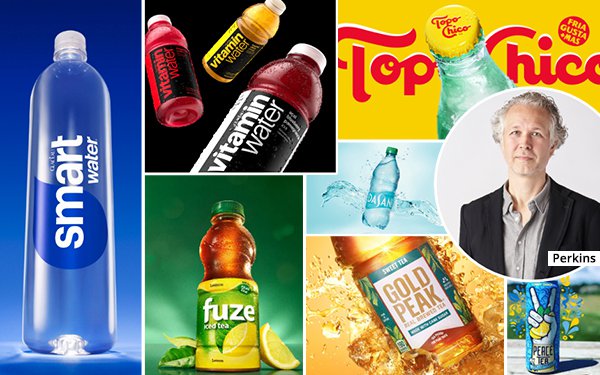
I’m actually answering these questions on a plane with a Diet Coke next to me. That’s my little travel treat. There’s also a half-finished smartwater in my bag because if
you’re not traveling with a smartwater you’re doing it wrong. And if everything goes to plan when I land, I’m getting an afternoon espresso with a Topo Chico. So, I guess today
I’m a walking portfolio.
If you’re interested in submitting content for future editions, please reach out to our Managing Editor, Barbie Romero at Barbie@MediaPost.com.