Brightfield Group, which
provides research-based counsel to brand marketers, continues to tout the importance of reaching perimenopausal women.
Back in August, Brightfield cited four trends among this group, which Marketing Daily reported as:
building strength and preventative health; engaging in holistic and natural wellness rituals; focusing on mental health; and having an appetite for digital tech and femtech.
“The reason we are looking at this data more closely on behalf of a lot of clients is because we see that perimenopause does have retail attention,” Denise
Paleothodoros, Brightfield’s women's health strategist, noted during a recent Brightfield webinar titled “Perimenopause: “The Business Conversation You Can’t Afford to
Miss.”
advertisement
advertisement
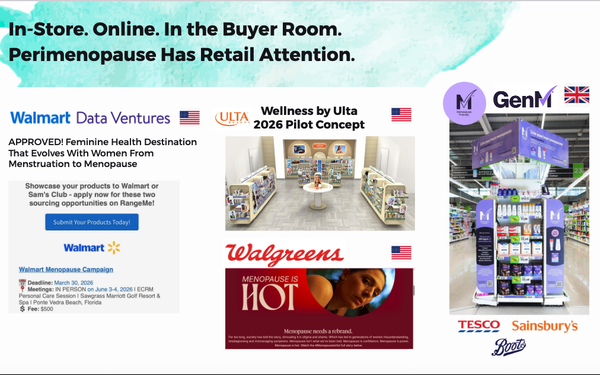
She cited retailers working in this arena:
Walmart Data Ventures. “They had done some research at the retail level to look at an expanded feminine health
destination inside the store, and that test was approved. They're now moving forward in filling up that shelf space (and) currently calling for products to present at a Walmart menopause campaign
event.”
Ulta. “They are piloting a “Wellness by Ulta” concept (and) have put great investment into the space. They're focusing on education in this experience;
the retail workersare getting better educated in helping customers.”
Walgreens “is committed to a campaign, ‘Menopause is Hot,’ and that's part of an ecommerce
initiative that they have been pushing forward.”
Paleothodoros credited the impetus for much of this retail action to a U.K group called GenM, which has given products a symbol to
signify them as “menopause-friendly.” That movement is backed by such retailers as Tesco, Sainsbury’s and Boots, she noted.
The Brightfield webinar provided brands with
several key perimenopause takeaways, including:
Awareness: Many women don't know they are in perimenopause. Brightfield finds that 51% of Gen X and millennial women
rate their understanding of perimenopause low, with 54% of women who answer "no” or “not sure" to the question still reporting three or more classic symptoms.
Perimenopause,
Brightfield notes, affects women from their mid-30s to early 50s, with classic symptoms including sleep problems (47%), mood swings (45%), fatigue (42%) and brain fog (39%). These symptoms are
“real, diverse and underserved.”
Self-navigation: Women are going it alone — and turning to brands first. A geat majority of women in
perimenopause (82%) self-diagnose rather than seeing a doctor, Brightfield says. Their leading activities are research, exercise changes, and symptom tracking.
Product opportunity:
Lead with solutions, not diagnosis. Supplements and other over-the-counter drugs “anchor most routines,” Brightfield says, but there is high “openness to lifestyle
tools.” Magnesium is currently leading ingredient conversations, with aloe vera and moringa (an herbal the “fastest rising” ingredients.
Social conversation: The
framing is shifting to solutions. Share of voice for women's health has risen 35% in the past two years, Brightfield reports, with the term "mood management" up 81% while "mood swings"
has declined. When it comes to influencers, “certified experts carry authority” while celebrities drive reach but elicit lower levels of trust.