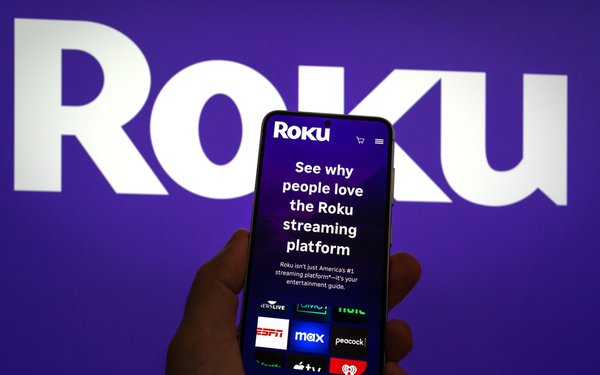
We may have newer configurations in terms of how we
access TV and streaming content.
Does more "creator content" help -- or something else?
YouTube and Netflix increasingly see opportunity here -- as does Roku.
The streaming
distributor sees this as good news, and is now starting a new dedicated creator content area and new content-creator FAST channels.
This seems to be a positive, all-encompassing direction for
the company -- which at its core has The Roku Channel and the FAST platform still surging --so much so that the channel now sits with the fourth-highest streaming share behind Netflix (8.2%), Disney
(5.3%) and Prime Video (3.8%), with the Roku Channel at 3.0%.
Roku wants to add more content to extend those creators' reach beyond current platforms -- building especially on YouTube when it
comes to video podcasts and other “user-generated content’' -- for free to the consumers.
advertisement
advertisement
Essentially this seems to be occurring mostly on a non-exclusive basis -- although there
is also licensed creator content.
Consumers can see creator content as a
specific piece of content or on a platform level.
More broadly speaking, Roku is expanding this content model side by side and evolving from its original role as a streaming distributor.
Early on, legacy cable TV operating systems were doing some of the same things, adding their own "free" and basic ad-supported channels alongside bigger, professional looking ad-supported cable TV
networks like USA Network, Lifetime and TNT.
At the same time, it also sold, separately, “premium” channels such as HBO and Showtime.
Comcast started CN8 (originally
Comcast Network) for its mid-Atlantic operations and Comcast Entertainment Television grew in the West regional systems. Charter launched Spectrum News and Spectrum Originals, which were free to
viewers with basic cable-channel packages.
In the current streaming world, consumers may be confused by the appearance of many different access points -- especially with ever more FAST (free,
ad-supported/streaming TV) channels in the works.
But perhaps on a deeper, more granular level, consumer behavior tells a different story -- a less "linear" story, so to speak.
Is this
part of a new -- and continually evolving -- model of "bundling" that analysts have been talking about -- an all-in-one destination where consumers want to hang out?